> 05.01.2026 > 06.01.2026 > 07.01.2026 > 08.01.2026 > 09.01.206 > 10.01.2026 > 11.01.2026 > 12.01.2026 > 13.01.2026 > 14.01.2026 > 15.01.2026
> pdf-Download ganzer Reiseblog
> Impressum Reiseblog
Travel leg to Doha
On January 5th, we left the cold of Switzerland and flew to Doha with Qatar Airways. The 5.5-hour journey in the Airbus A350-900 was very pleasant.

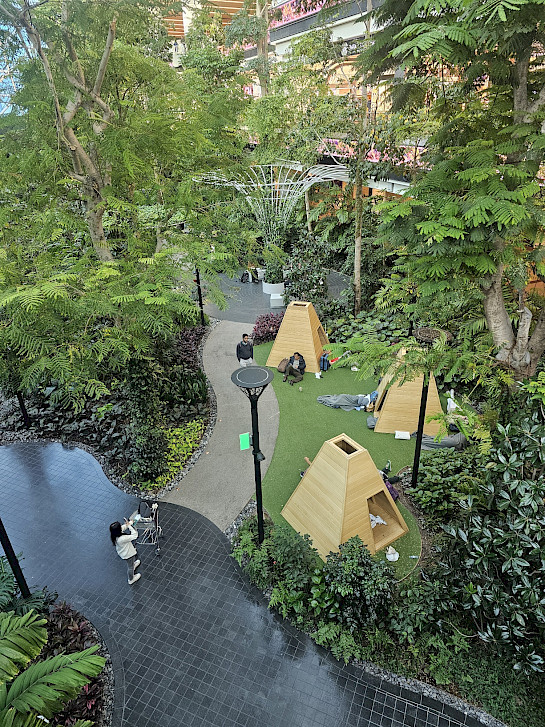
After that, we were extremely impressed by the ingenious airport with its huge, green indoor oasis under the impressive glass dome roof.
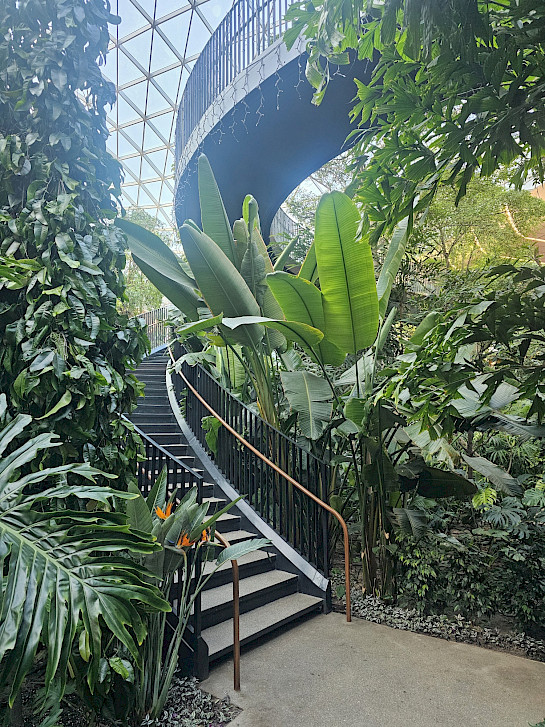

The planned length of stay there extended slightly from the originally intended 10 hours. No problem, as we were able to use the extra time for further exploration in addition to spending the night in the oasis's tipi.
Connecting flight and arrival in Entebbe
Around noon we continued our journey with a Boeing 787-8 to our first destination in Uganda.

There, we were picked up by our friends from Kikooko and driven to the Gorilla Neighbour Guest House, which we already knew very well from previous stays.

Day 1 in Entebbe
The day started with fresh local fruits.
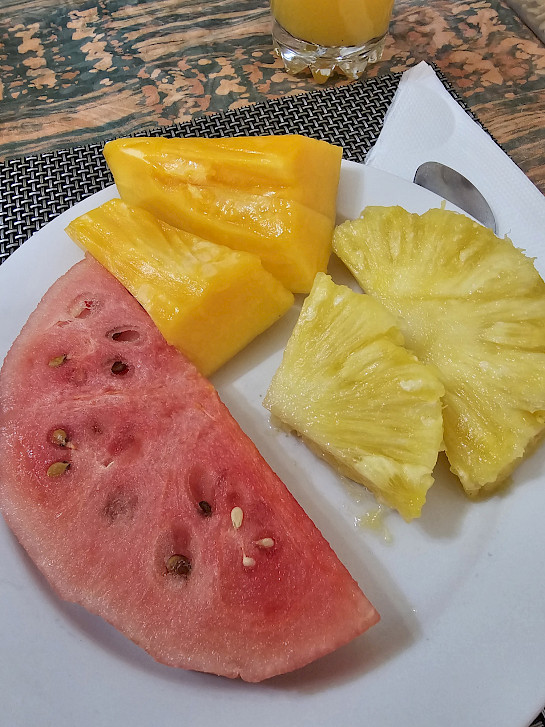
Afterwards, we enjoyed the warm weather with a short stroll through the surrounding area before being invited to lunch at Lake Victoria. Many lively conversations and even more abundant food made the time fly by.
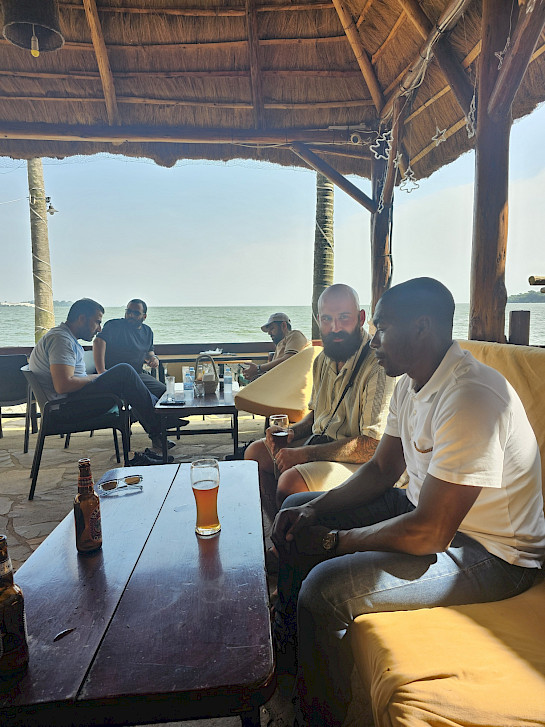
In Uganda, the start of the new year isn't just a matter of a few hours, but is celebrated repeatedly throughout January. This was also the case at the New Year's celebration that was spontaneously organized for us.

Day 2 in Entebbe
Today we were able to spend another quiet day in the area around our guest house.

After a late breakfast, a short stroll through the local area, good conversations with familiar faces and new acquaintances – and before we knew it, it was noon again.
Upon returning to our accommodation, we found this "bazaar."

In order to purchase authentic giveaways and gifts for the holiday fair, the travel company ordered the relevant items directly from the supplier on site.

On this occasion, we couldn't resist also taking advantage of special offers to cover our own needs – after all, we each took an empty suitcase with us on our trip...

And then, anticipating another boozy and fun-filled evening, we wanted to get some rest... But then Ivan – another old acquaintance who had also visited us in Switzerland – showed up and – as always...

After dinner at Victoria Mall...

...Thursday then transitioned into Friday at Kora Bar.


Transfer to Cabal
We left the Gorilla Neighbour Guest House well-rested in the morning.

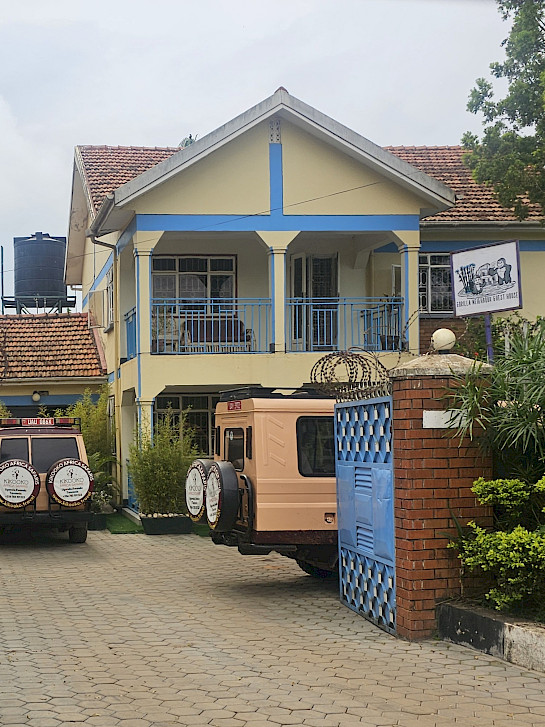
Together with Egidius, one of the two main people responsible for the Kigezi Orphans Project, we set off on the journey to Kampala.
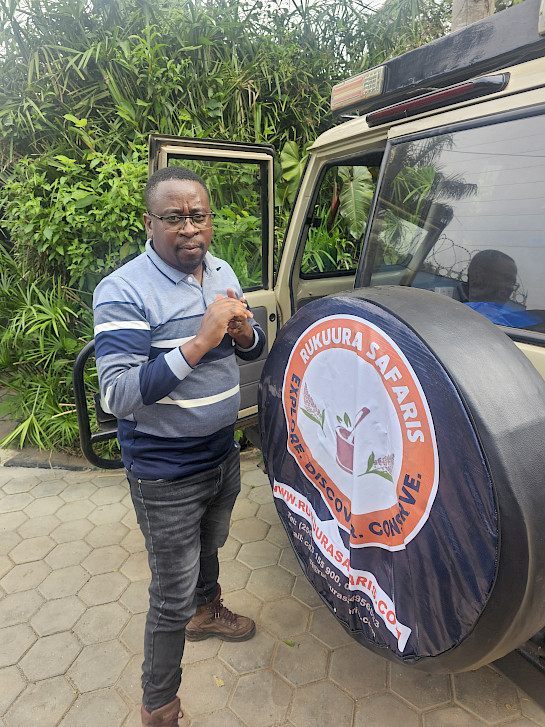
First, we drove a few kilometers north on the toll road "Express" towards Kampala.
Here, we mainly saw advertisements for the upcoming presidential election.
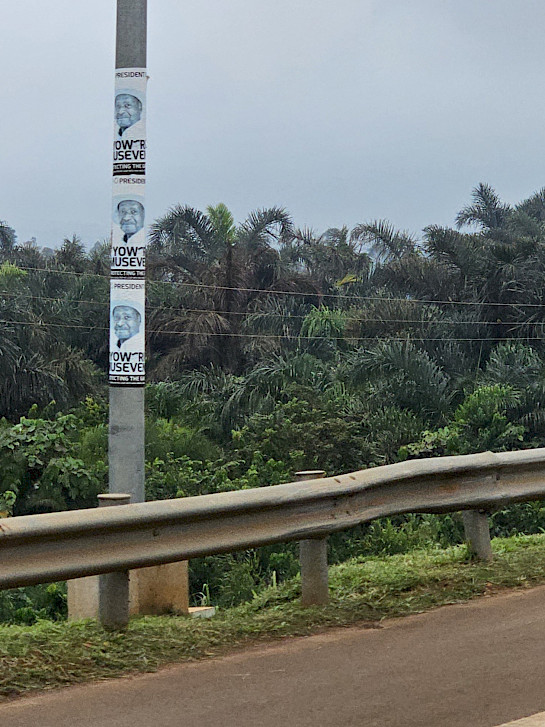
Our projections indicate that the number of posters in question nationwide is likely to easily exceed the oft-cited ten million mark – and this, mind you, in an election without a viable opposing candidate.

We then turned off onto the mostly - but not entirely - paved "National" road into the African Traffic.
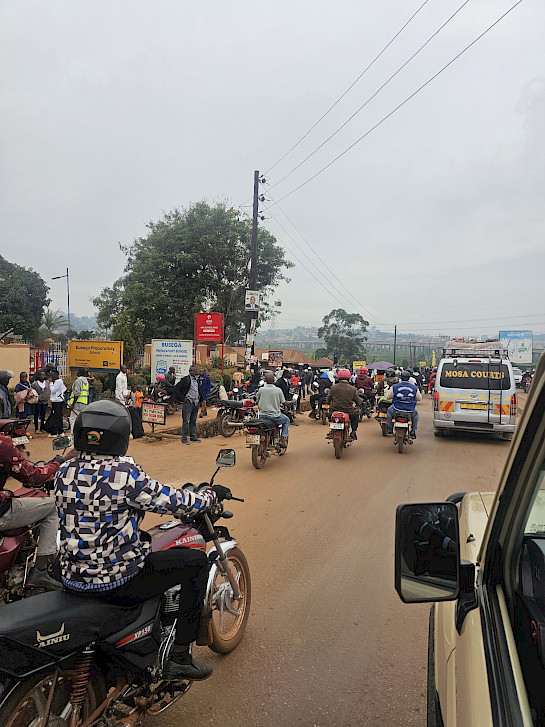
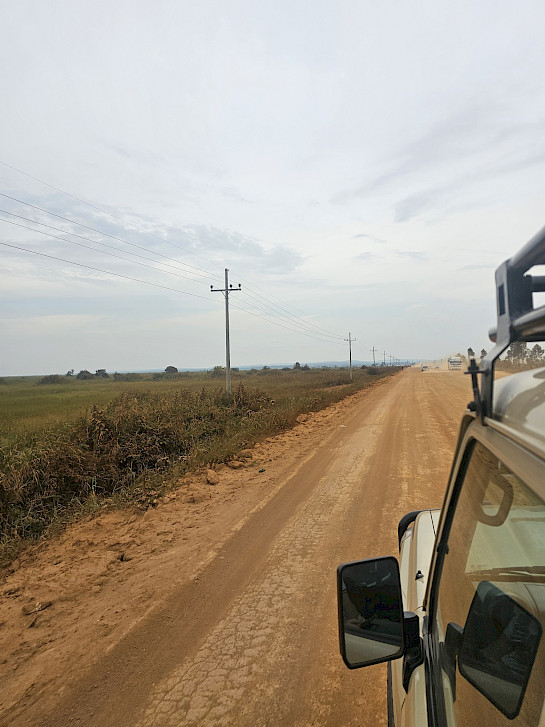
And there it was again, the Africa we encountered at every turn, or rather, with every rotation of a wheel, in the more densely populated areas. Lots of micro and small businesses, with the occasional modest industrial operation.
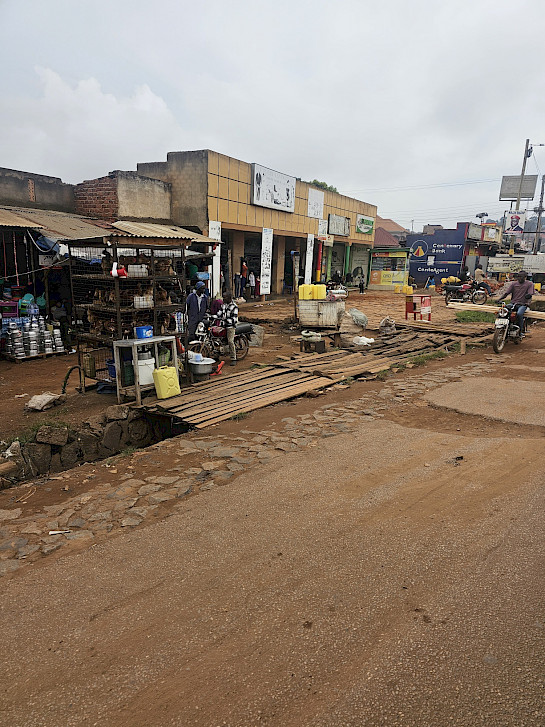
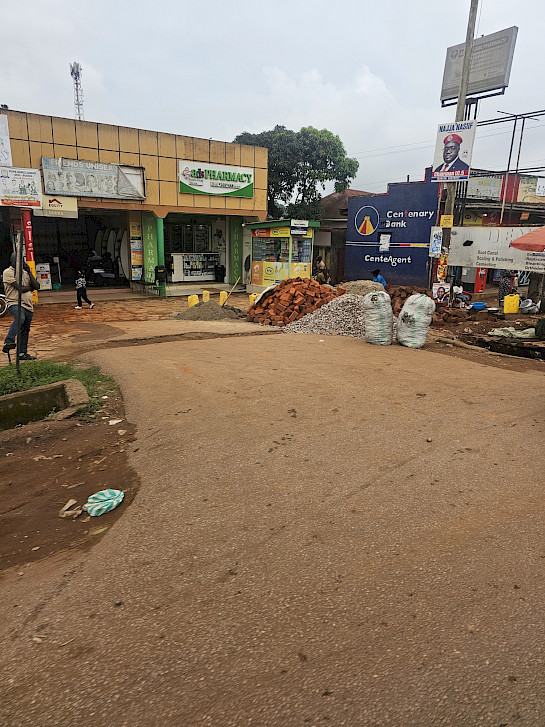
Will the expressway to Kabale, which was started here, perhaps also be completed by the time our guest house at Lake Bunyonyi opens ...
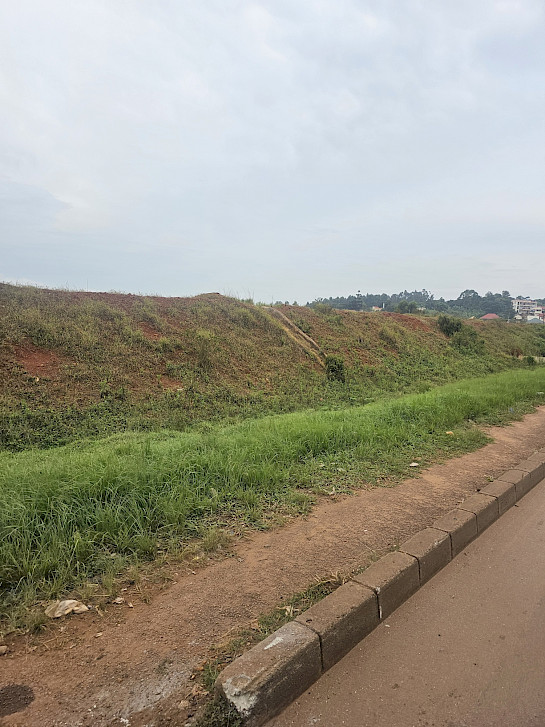
As traffic density decreased, the journey through green, rural Uganda with its great diversity of plants became increasingly quieter.

After about a third of the journey, we crossed the equator and found ourselves on the southern part of the globe (or perhaps just on the underside of the Earth's disc).
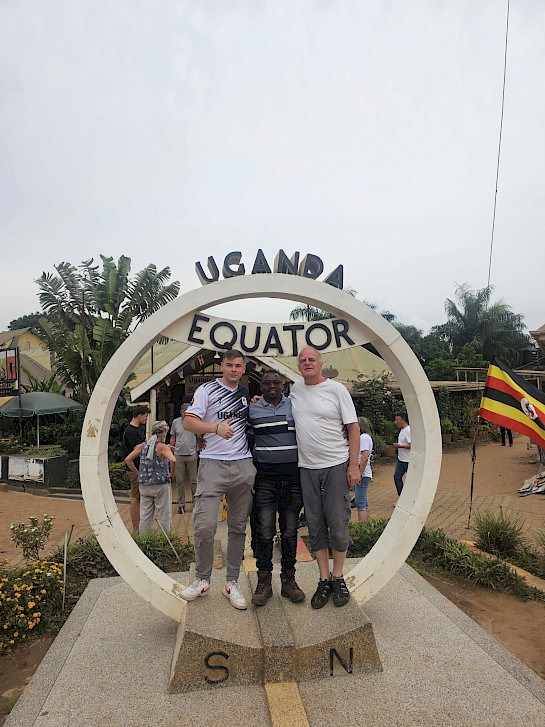
As the number of hills increases, the population density in the southwestern highlands decreases significantly.

Besides hills, there are also many fertile areas, like here near Lake Mburo.
However, I will only be able to visit this area with the lake and the (by local standards) rather manageable national park of the same name in person for the first time during our project trip next fall.

In the early evening we arrived safely at our intended destination, where we were greeted by Julius, the second main person in charge of the local project.

There was plenty to talk about over dinner. Then came the briefing for the work program for the next four days.
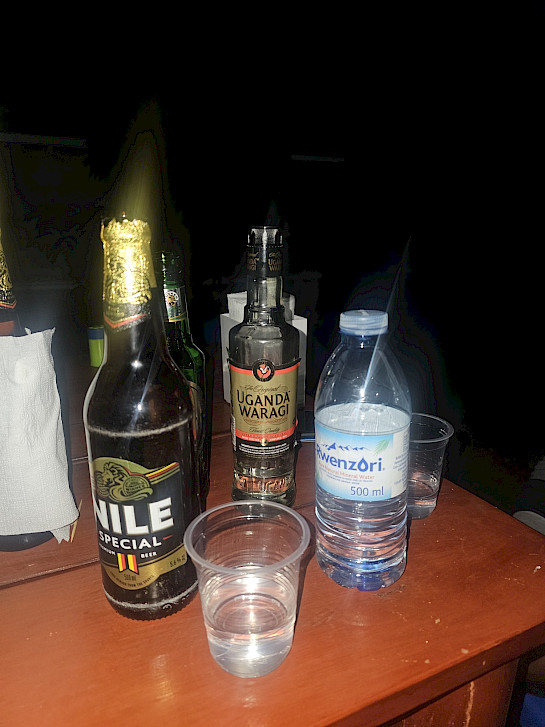
And yes, there was alcohol again – it's not always easy to find a healthy balance that meets everyone's expectations.
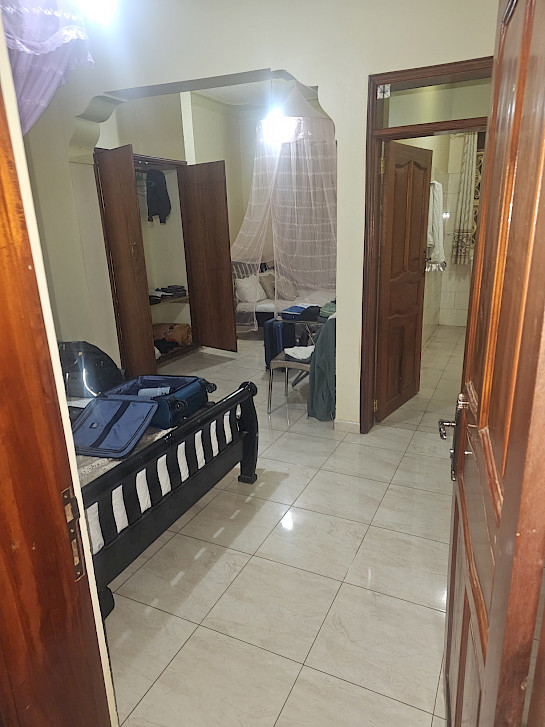
The last official act of the day was then moving into our new home.
Community meetings and celebrations
Believe it or not, this current trip, while bringing us great satisfaction with our passion project, is also quite demanding.
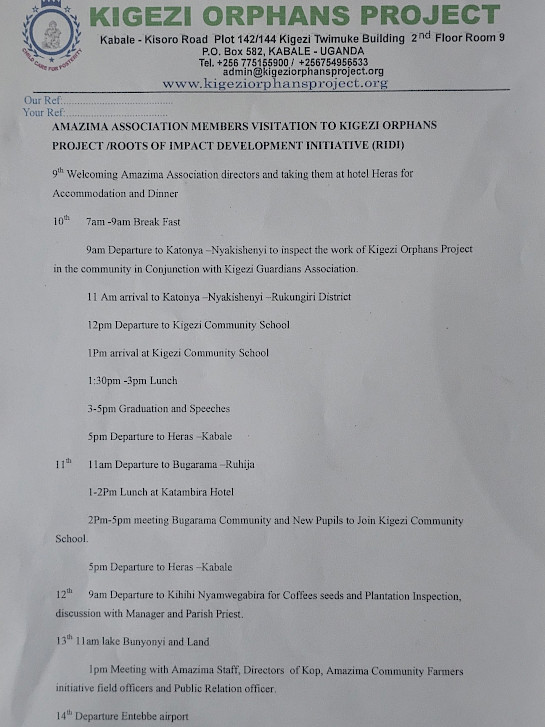
Here's our program for the next five days:
It also takes a certain amount of discipline to quickly update the travel blog at seven in the morning on our hotel balcony before breakfast after "such nights" before we set off for our first day of work in Kigezi.

After a colorful breakfast, we set off for school.

The trip was once again very impressive. The following pictures speak for themselves and provide a highly authentic insight into the living environment of the population in the catchment area of the Kigezi Community School.


Along the way we had the opportunity to visit one or two villages and individual settlements.
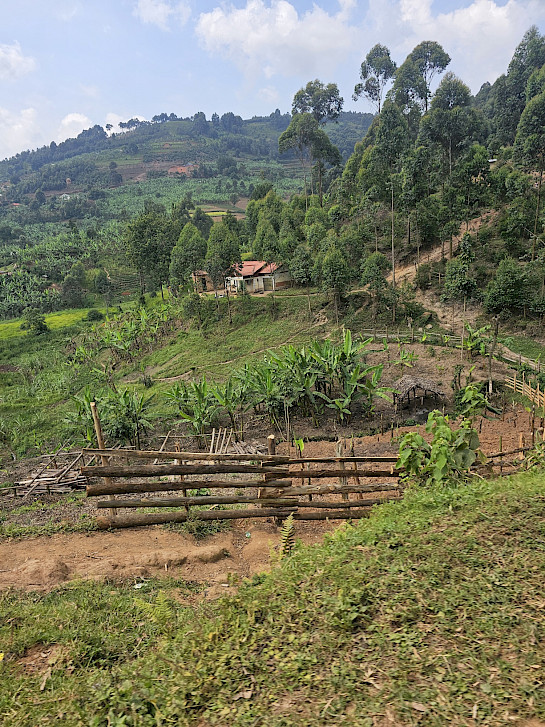


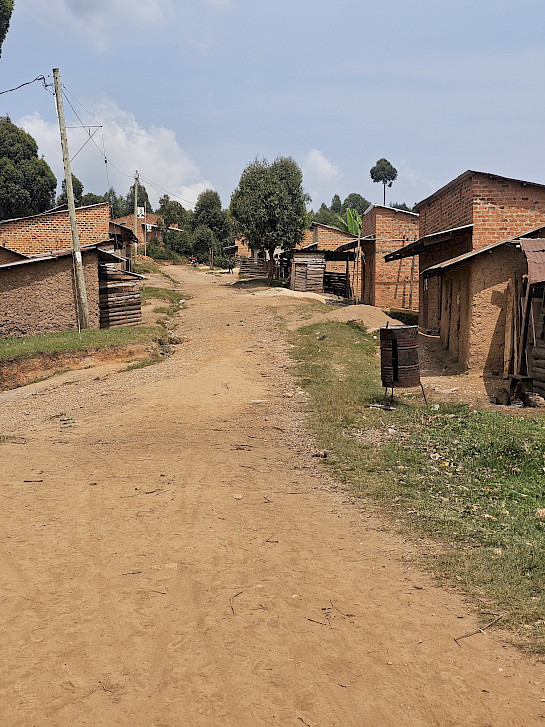


School uniforms, which are currently supplied by external manufacturers without providing any further benefit to the community from the value chain, will soon be produced here.

Furthermore, we had the opportunity to review the concrete implementation of the jointly planned development with the three main people responsible for the Kigezi Community Project. With Joseph, the economist, Robert, the agronomist, and Daniel, the finance director, we once again encountered trusted supporters whom we had the pleasure of meeting on a previous occasion.


The Amazima Farmers Initiative focuses on sustainability and economic viability in establishing local agricultural projects. We recently visited one of the many groups involved, which received an initial loan of approximately one thousand dollars. They receive high-quality seeds and learn how to cultivate vegetable seedlings in the local community garden. These seedlings are then distributed within the wider community, taking into account agricultural and economic conditions.
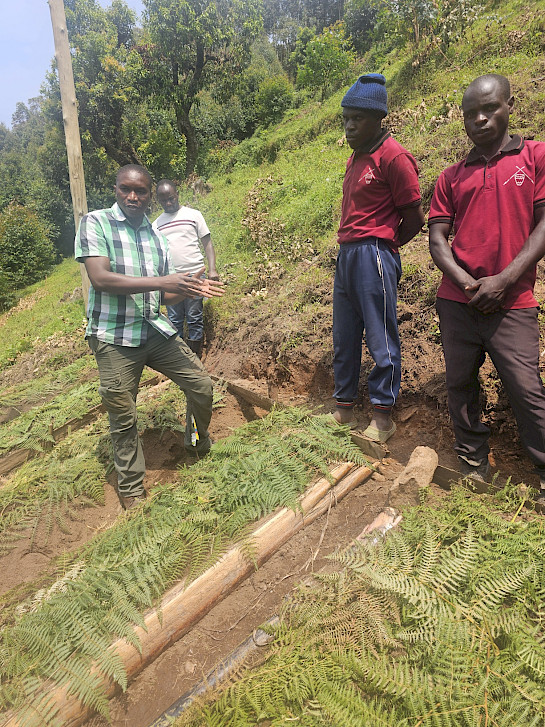


The journey then took us to the last leg of a long, busy day. To accommodate our schedule, the graduation ceremony for the foundation stage was arranged so that we could attend despite the school holidays. During this ceremony, the youngest students receive their diplomas for successfully completing the foundation stage before moving on to primary school.
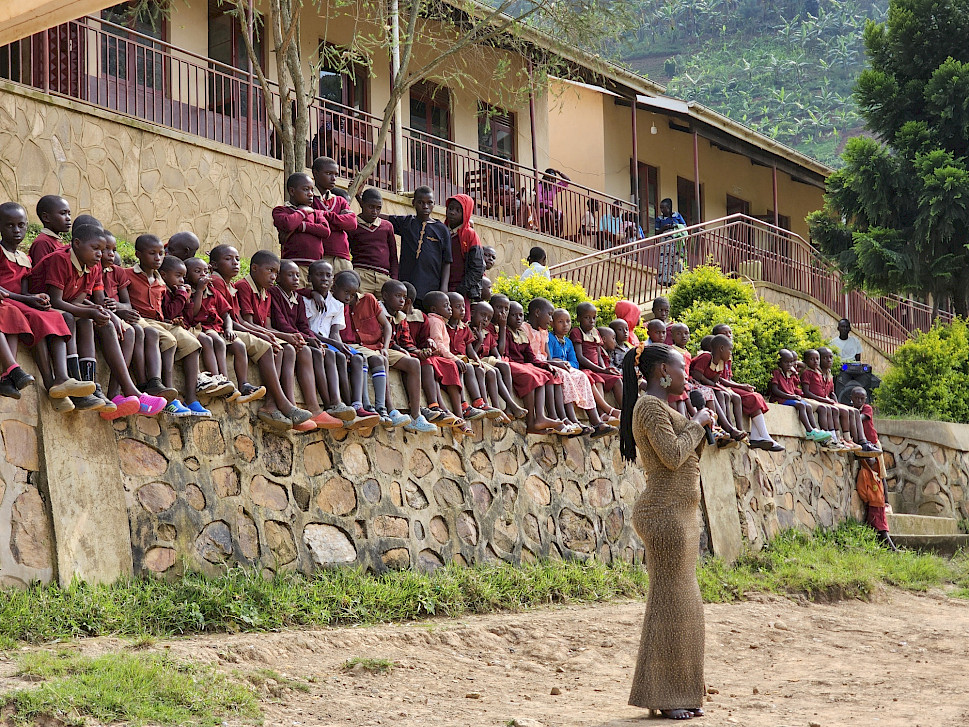


In the subsequent relaxed part of the evening – with plenty of food again – we had further opportunities to exchange ideas with the school's management and staff.

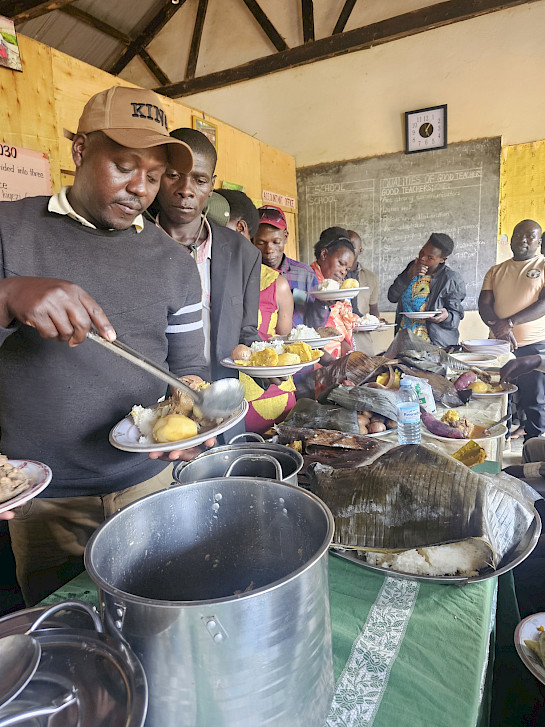
Traveling in the Ruhija region
We briefly turned today, Sunday, into a workday. Therefore, instead of going to church, Julius and his children came to our hotel for a generous breakfast together.

Micha then took over childcare...

and together with Julius, I set up the new laptop that had been brought for him.

We then set off into the school's extended catchment area.

A quick stop at the ATM to withdraw 2 million...

and some snacks for the journey - because breakfast was a full two hours ago.


Once again, we encountered one of the countless production sites of the local magic potion Enturire, also known as "beer," on our journey.
You mix dried sorghum with a little ash, prepare an infusion, sweeten it with honey, and let it ferment properly...


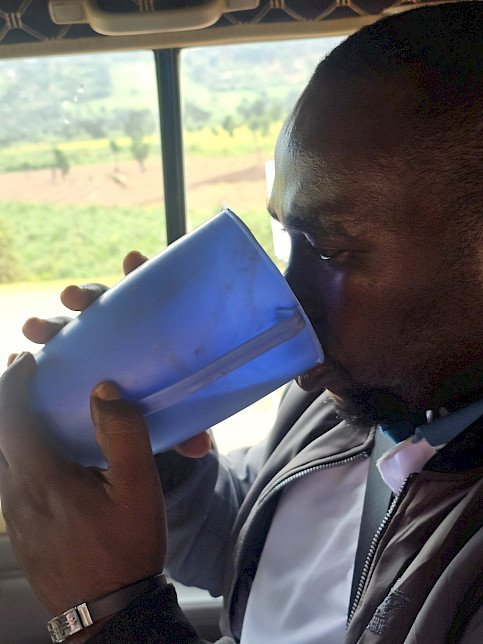
We had to register at the security checkpoint to drive through a national park.


Following narrow roads and the tracks of forest elephants, we then reached our first destination.


Upon arrival in the village, there was still some Sunday church service to be had.


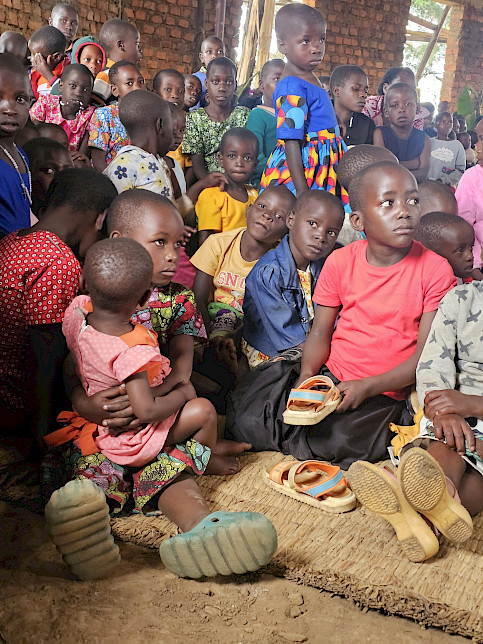
The church service was briefly interrupted by our delegation to allow for a promotional appearance for the school.


The message has obviously been received.
And then – as is customary – beer after church. For journeys through underserved regions, we always carry an emergency supply of NILE beer in the cooler at the back.

With a bit of beer in your system, life is often much easier and more relaxed – especially when it rains and the roads get slippery. And yet, the journey still sometimes takes a little longer...


The schedule was once again a mess... Our journey then took us through the area where we had encountered the mountain gorillas on our first trip.

Then the obligatory cool down and debriefing at another small feast...

The subsequent drive back was almost boring, and we generously left the overdue car wash to our hosts.
The long days of travel, with their many encounters and conversations in the Babylonian linguistic mix, are quite demanding. So we're looking forward to our almost nightly tea ceremony. Yes, you read that right: tea. On this trip, we rarely feel like having an after-work beer or a nightcap.

Well, an occasional local cigarette certainly comes in handy. We're just not entirely sure yet whether smoking is considered a sport here, or whether the message is that only monkeys smoke.

Coffee cultivation and processing
The varied journey took us up to almost 2,500 meters above sea level.

Since southwestern Uganda lies in a volcanic region, the area is very fertile even at this altitude.

Nature has created an impressive landscape here with its hills and valleys, dotted with many lakes in the depressions.

The clear spring water from the Kigezi region, which is also said to have healing properties, is likely to surpass even the highly praised Fijian water.

We were even allowed to travel the last half hour of the two-hour journey on a proper road…

until the "African Style" quickly caught up again

Then we arrived at the coffee producers' site and spent a full six hours in the area – six more unforgettable hours in Uganda! Small talk soon turned into networking.

Here is a little more about what we saw, described, and experienced – not least through the self-explanatory pictures. As always, we would be happy to provide more detailed information personally if you are interested. The almost exclusively natural cultivation and processing process is both multifaceted and demanding.
From cow dung...

about fermentation...

to the biogas, which is used to supply energy to the kitchen.

The resulting biomass is used to fertilize the coffee bushes.

Seedlings are grown from state-subsidized, externally sourced seeds in simple but well-designed greenhouses,

subsequently cloned

and prepared for planting out.

Then we walked past the vegetable garden…

embark on an absolutely educational tour through the plantation – biology lessons of the highest quality.


Surprise, surprise – suddenly we're standing at the fish pond. Besides the fish, the water also has internal uses within the company.

The fruits, picked twice a year during a main harvest and an intermediate harvest.

They are selected first to sort out unripe, green specimens...

then soaked for several hours until the unusable "floaters" rise to the top to be skimmed off...

and then dried in the tent, which was heated by the sun to over 45 degrees.

In this state, the fruit can be stored for almost any length of time until further processing.

Here, the quantity we ordered is transported to the nearby small town for the only external processing step – the mechanical extraction of the actual coffee beans from the dried fruits.

During this process, we said goodbye to what was, surprisingly and happily, for the first time, an alcohol-free late lunch or early dinner.

After darkness fell, both the coffee beans and we returned to the coffee farm for what was, for the time being, the last processing step of the "black gold" - sorting.

Beans that are too small or too large to be processed into whole beans end up as ground coffee. This entire "screening" process is done manually and by eye.
Here's our 10 kg of coffee:

While sorting the coffee beans by the light of our cell phones, there was just as much chatting and laughter as during today's drive in our car. We were happy to leave a generous tip.
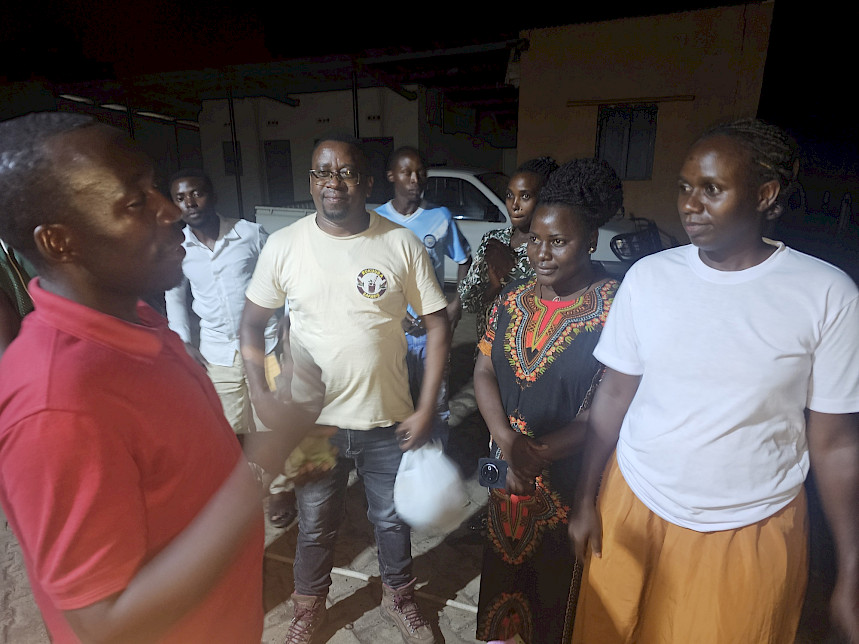
And now we know that we can have fun even without alcohol...
Final meetings after visiting our property at Lake Bunyonyi
After a short drive, we reached a small boat harbor on Lake Buyonyi.

Having a small emergency supply on hand – you never know…

we boarded our boat.

As usual, the boat captain provided us with plenty of local travel information along the way.

The Wave Rider...

brought us close to our property in a half-hour boat trip.


This small harbor...

It's about a 5-minute walk away. The footpath leading from here will eventually be upgraded to a road to better connect the surrounding region. This, along with the fact that the area around the lake is expected to greatly benefit from the anticipated general economic and tourism boom, will prevent us from making a bad investment.
Future development could look like the following: Initially a small guesthouse, gradually evolving into the LAKE BUYONYI AMAZIMA LODGE.


Then, on the return journey, some "birdwatching on Punishment Island" - to exploit this two-minute stop for touristy reasons...

Man does not live by beer alone:

On the way back, we experienced some delays due to one of the many election events currently taking place.

Before the lunch planned for midday, we met for a meeting with the closest circle of project managers.

Then, at exactly 17:43, our lunch finally began.

This also rendered the scheduled 6:00 PM meeting with other project participants obsolete. However, we arrived at Capricon soon after.

This round demanded a great deal of attention and full concentration.
Almost two years ago, the idea for the Amazima Community Project was born in these premises. From this emerged the Amazima Farmers Initiative, which to date has provided seed funding and extensive guidance and support to over 50 groups in the wider Kigezi area, enabling them to achieve sustainable development. We will certainly report on this in one of our upcoming newsletters.

Then – almost two hours after our slightly delayed lunch – it was time for dinner, which we vehemently refused. So, after a proper farewell, we made our early exit – well-stocked with a Nile for the road.

Back at the hotel, we started preparing for our self-inflicted, much too early departure the next day. More on that later. At least we managed to repackage the 10 kg of "assorted FAQ" coffee beans into more manageable smaller portions.

Back to Entebbe
Since we missed booking our scheduled domestic flight back to Entebbe in time, we set off a little earlier than planned the next morning to arrive in Kampala in time for our next appointment after an eight-hour drive.
We had arranged a meeting there with Sarah Fluck, one of Radio SRF's two Africa correspondents. Despite her current heavy workload, she was able to make time for us this coming weekend. We've only had sporadic contact with her via email so far, so we definitely didn't want to miss the opportunity to meet in person.
Even during the drive, Voting Day was a constant presence in our minds.

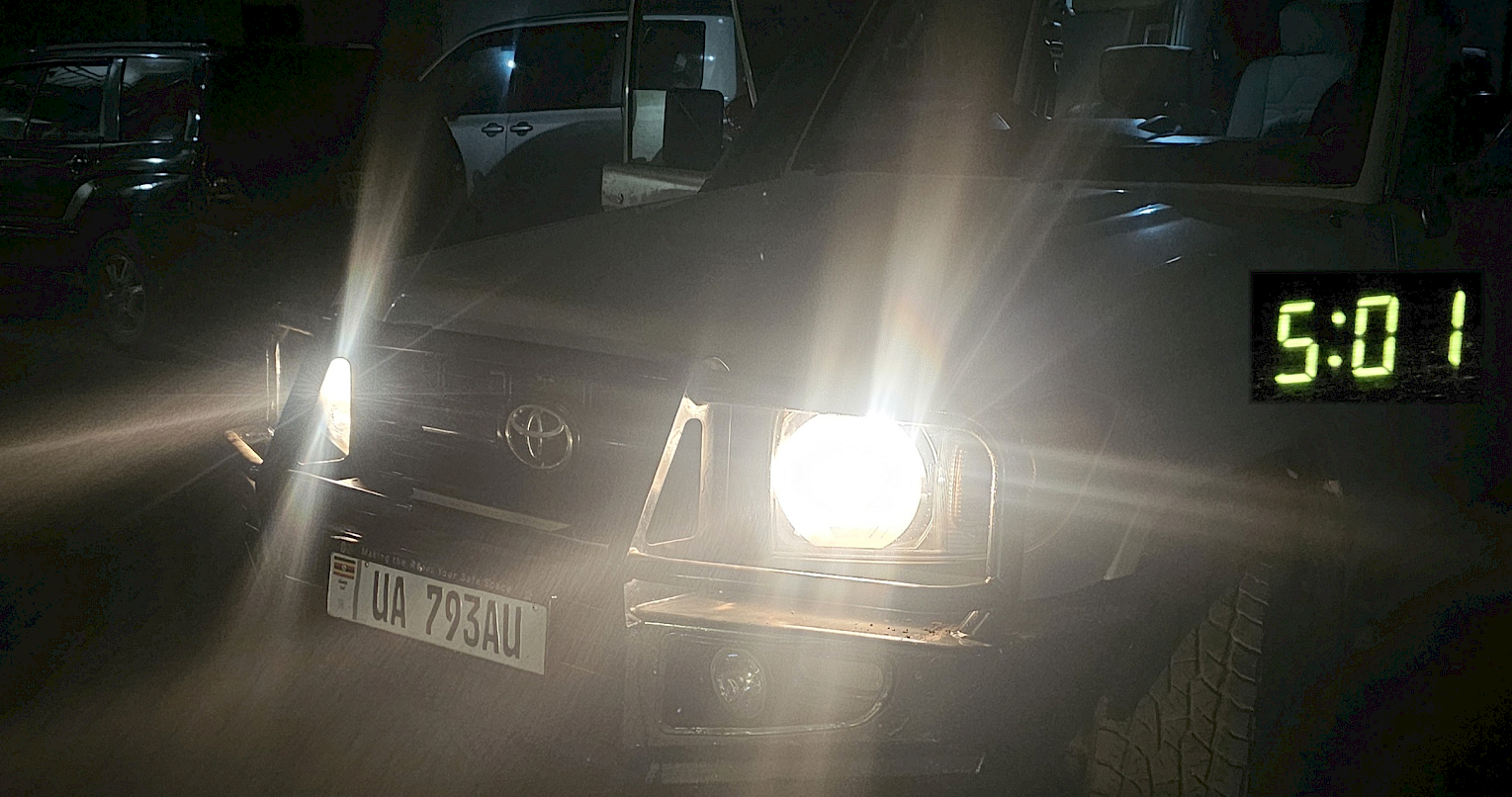
And as a driver, you also need to stay up-to-date...

Our screen time will likely decrease significantly in the coming days. Network connections will be temporarily interrupted for security reasons during the elections.

And so, during the journey – thanks to the dead internet – we learned a great deal about the background to the ongoing election spectacle and the current political and social landscape in Uganda. This included, for example, why President Yoweri Museveni is practically immortal from a political perspective and currently the only "electable" candidate.

Over the past few days, we've not only learned a great deal about Uganda, but also about the direct and indirect impacts of our project on the ground. We've made much more progress in the last two years than we could have perceived from our rather narrow and limited perspective in Switzerland. Far beyond the direct support we're currently providing to stabilize the school, we're also making excellent progress with our medium-term plans. Strengthening the school's surrounding community has progressed much further and extends far deeper into the heart of the community than we had anticipated.
In this context, we'll be happy to explain in more detail in an upcoming newsletter why the main local organization has changed its name.
Furthermore, we will be pleased to provide a more detailed explanation in an upcoming newsletter. The KIGEZI ORPHANS PROJECT (KOP) will be renamed the ROOTS OF IMPACT DEVELOPMENT INITIATIVE (RIDI) on January 1, 2026.
And in the Swiss project, we will therefore no longer refer exclusively to the Kigezi Orphans, but increasingly also to the Kigezi Community.
With this lengthy interlude to fill the travel time, we've now arrived back in the Entebbe region. After a quick lunch in the Victoria Mall, which we know very well...

we freshened up briefly and then set off towards Kampala for our meeting at the five-star Lake Victoria Serena Golf Resort.
And then, once again, I got incredibly annoyed with myself: Because of the change from a domestic flight to driving and the lack of internet, I simply forgot to confirm the appointment with Sarah. So we had to leave the resort empty-handed.

We then made good use of the free time we gained to stroll around the streets surrounding the guest house and satisfy our shopping cravings.


Then we were allowed to accompany our hosts on a shopping trip to their trusted retailers.

Upon our return, we were greeted by spontaneous visitors on the balcony of our room at the guest house.

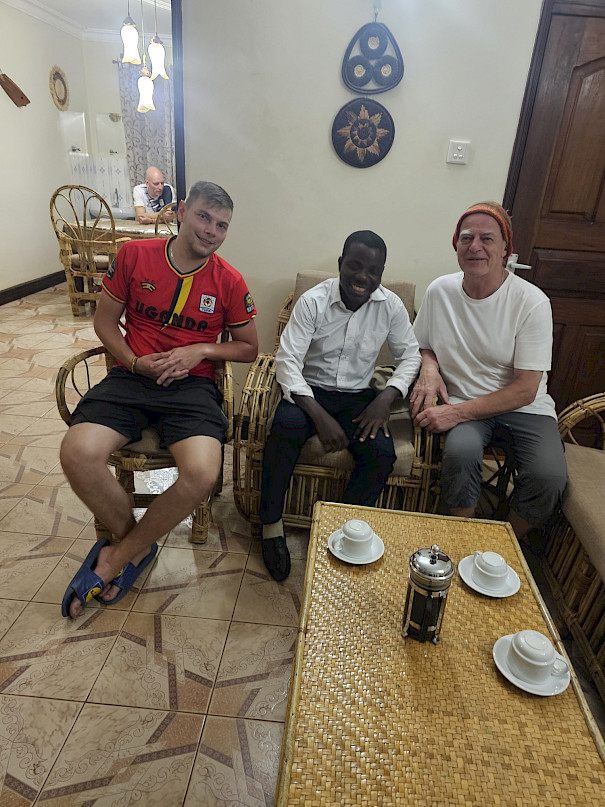
In the evening, we finally met John for dinner. We had met him on our first trip in 2023. He was delighted with the camera we had brought for him and the photo book dedicated to him, documenting a short tour through the Grisons mountains.
Apart from here in Entebbe by the lake, mosquitoes hadn't really been an issue on this trip. So we gave them one last chance that evening.
After saying goodbye to John and spending one last night in Gorilla Neighbour, the departure day of our third Uganda trip had unfortunately already arrived.
The departure day
How to make deals in Africa...

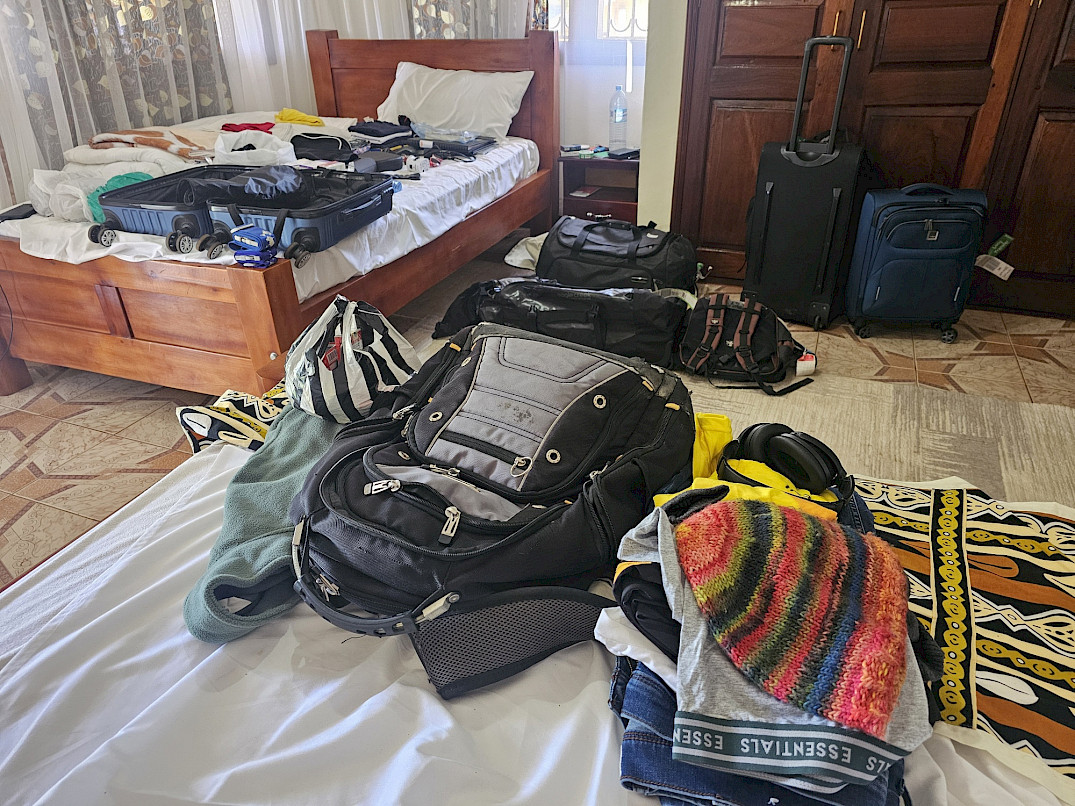
although we are well aware of the rules, we still had to start thinking about how we would bring all our "stuff" back home in a way that complied with the regulations.

After packing was finished, we had a quick lunch with Warren, whom we will meet again in a few days at the holiday fair in Bern, and Alex, our guide on the first tour of 2023.

The subsequent flight to Doha was smooth and uneventful. In Qatar, after two days without internet, we finally had network connectivity again and were able to take care of some of the outstanding tasks during our three-hour layover.

We were able to complete the second leg of our journey in the highly regarded Airbus A350-900 of Qatar Airways - including Starlink high-speed internet throughout the entire flight.

Many thanks to everyone who has followed our journey and supported our project in any way.
We are always available for more detailed information – even in person.