Spontaneous visit to the scene
> 02.06.2024 > 03.06.2024 > 04.06.2024 > 05.06.2024 > 06.06.2024 > 07.06,2024 > 08.06.2024 > 09.06.2024 > 10.06.2024 > 11.06.2024 > 12.06.2024 > 13.06.2024
> pdf-download of entire travel blog
> Imprint travel blog
A spirit of optimism marked by anticipation and respect
Micha took me to the airport this afternoon. From now on, I'll be travelling alone. In 36 hours, I will arrive safely in the Kigezi region. The decision to go on this trip was made spontaneously and at short notice. The situation requires concrete agreements on site, which will give the successful start of the project additional momentum after the long, arduous preparation period.

So here I am sitting in the more than half-empty giant plane from Zurich to Milano and I'm just struggling to grasp the certainty of the surreal situation that I really have just set off for Africa all alone. The long journey will demand a lot from me - it's not always good to let myself go off alone with my thoughts. But I'll do my best to use the time. For me personally, for the people involved in the project and especially for the children of Kigezi.

The B 787-9 took me safely to Milano and from there on to Addis Ababa. And in the meantime I arrived in Entebbe with the B 737-MAX - where the wait at the immigration desk took almost as long as the flight from Ethiopia to Uganda.

Freshly showered and somewhat rested, we now go with the friends of Kikooko (the tour operator who infected us with the Uganda virus) for a reunion drink and then for dinner together, which could also have the character of a business lunch, as we will also use this opportunity to exchange ideas in detail about how we can continue to support each other.

"Business lunch" with Kikooko
Of course, there is plenty of beer flowing at today's dinner. Nevertheless, it is much more than just a boozy reunion. With Warren, Alex and Ivan, memories of our trip to Uganda and our meeting at the holiday fair are refreshed.

But the main topic is the future of our collaboration. There are many ideas on the table, everything from obvious things to pipe dreams is brought up and discussed.

The last doubts about the sense and nonsense of my spontaneous trip to Uganda have vanished.

AMAZIMA lives
We set off early and took the funny AeroLink small plane from Entebbe to Kihihi. Up to this point I was accompanied by a cheerful international team of ten helpers who were building a small lodge out of bamboo in the region. For the last leg to Kisoro I enjoyed the atmosphere of a private jet - a plane with two pilots all to myself...

Flying over the Bwindi Forest, home of the mountain gorillas, and the impressively branched Lake Bunyonyi, I was reminded of the unforgettable trip from last autumn.
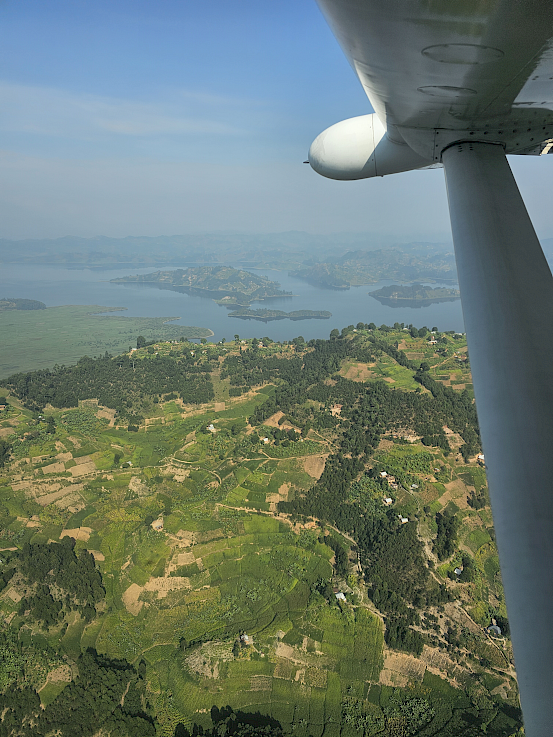
This was followed by a warm reunion with Julius and Egidius, the main people in charge of our local partner organization, the Kigezi Orphans Project.

On the two-hour drive to Kabale, the largest city in the Kigezi region, all my first impressions of Uganda came flooding back. This time, however, with the deep-rooted knowledge that these first impressions reflect everyday life in the predominantly very rural Uganda.

After arriving at my hotel and having a quick refreshment, we meet for a briefing about the planned program for the next few days. In particular, we talk about tomorrow, when we will travel to the center of Kigezi to have an in-depth discussion with those responsible for the local community. There is talk of meetings and speeches. Ultimately, it is about building trust. Our commitment is appreciated and is fully supported by the local project managers. Nevertheless, we will only be able to achieve our ambitious goals if we enjoy the absolute trust of the local population.

We end the evening with local food and some Tusker from Kenya - with the great satisfaction that we have done a lot of things very right so far, including us in Switzerland. And I do mean us, even though I am currently traveling alone in Uganda.

The program for my upcoming stay

The road from Switzerland ends in Kigezi
The distance from my current location in Kabale to the Kigezi Community School is just over 40 km, which, in our experience, corresponds to a travel time of around 30 minutes - here in Switzerland. But if the road conditions are good, it's easily 2 ½ hours here, and significantly longer if it rains. When it rains, it's not uncommon for the roads to be impassable at all.

The words meetings and speeches are in the back of my mind. But at this moment, neither my imagination nor my expectations are sufficient to extract anything more concrete from these terms - but that will change very quickly. My astonishment at having set off early this morning turns into understanding when, shortly before reaching the school in the middle of the forest, we suddenly receive an "escort".

And suddenly it becomes absolutely clear to me what awaits me here today. I have the unforgettable reception from last autumn in the remote village of Dego in mind and immediately experience a déjà vu of the highest order - including tears in my eyes.
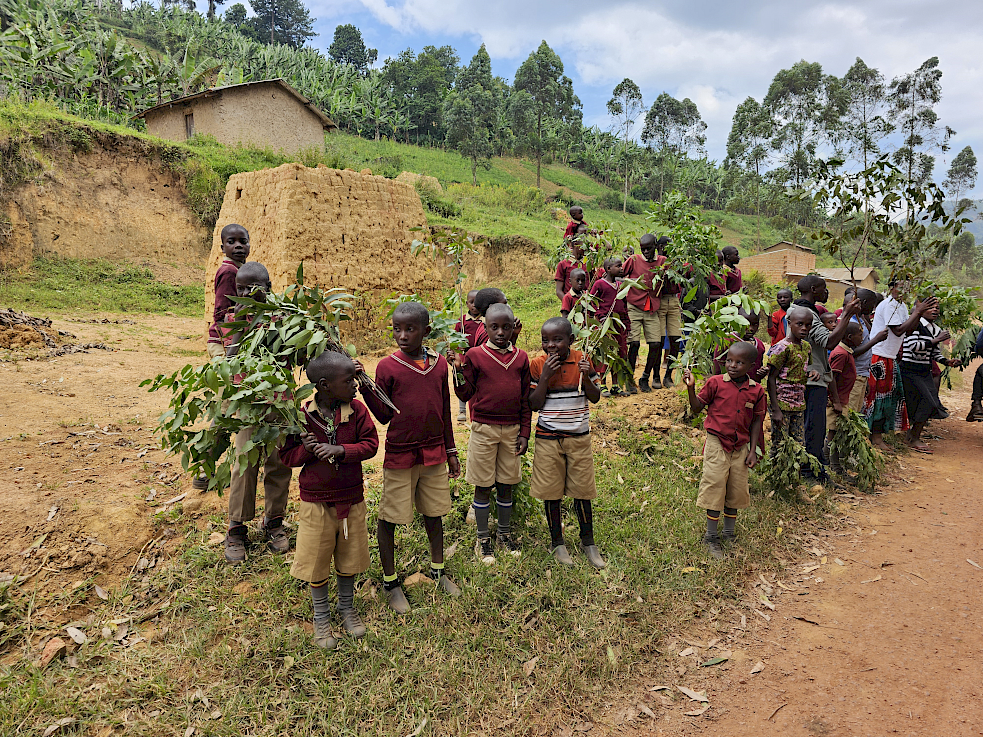
What follows is once again indescribable. A candid, two-and-a-half-hour ceremony with singing, dancing and speeches, which is much more than meetings and speeches.
The main presentation of the two local project managers, in which the project's development to date and future direction are explained in detail, can be viewed at the link below.
> Main presentation of the local project managers
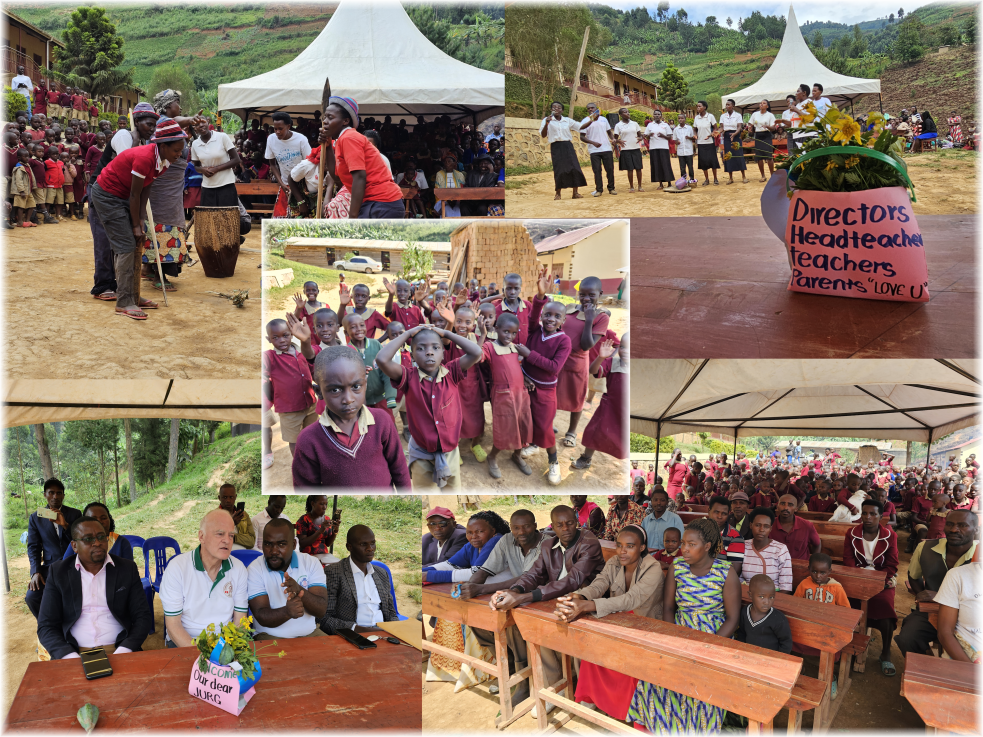
Realistic scenarios are expanded into castles in the air. The expectations of the recently founded AMAZIMA association and the successor organizations to be created from it are huge. Something is coming our way...
...but first, fortunately, the lovingly prepared banquet with endless local delicacies.

Even if I don't feel it's quite right right now, I can deal with the fact that I'm standing in front of the impressive community as a guest of honor with seemingly overwhelming forces. Nevertheless - and I didn't fail to mention this to this very community in the festive mood - at this moment I'm also a little sad and ashamed that I'm standing there all alone, without my project partner who dragged me into this honorable task. Honor where honor is due.

What did the children sing? That is what is written at the top of the title of today's travel blog. Our trip happened to lead us to Kigezi - thanks to some money, vaccinations, visas and passports. The children of Kigezi also need a passport for the long journey that lies ahead of them: Education is the passport to life.
The school from the inside
Today we're going back to school. On the way there, the two main people in charge of the Kigezi Orphans Project, Julius and Egidius, tell me a lot about the extensive, impassable catchment area from which the students of the Kigezi Community School come. More than half of the current 300 schoolchildren stay in the school full time during class periods, as the journeys to and from school are very long. Julius also grew up in this area and has strong roots here.

When I arrive at the school, I have the first time to take a really in-depth look at the local conditions.
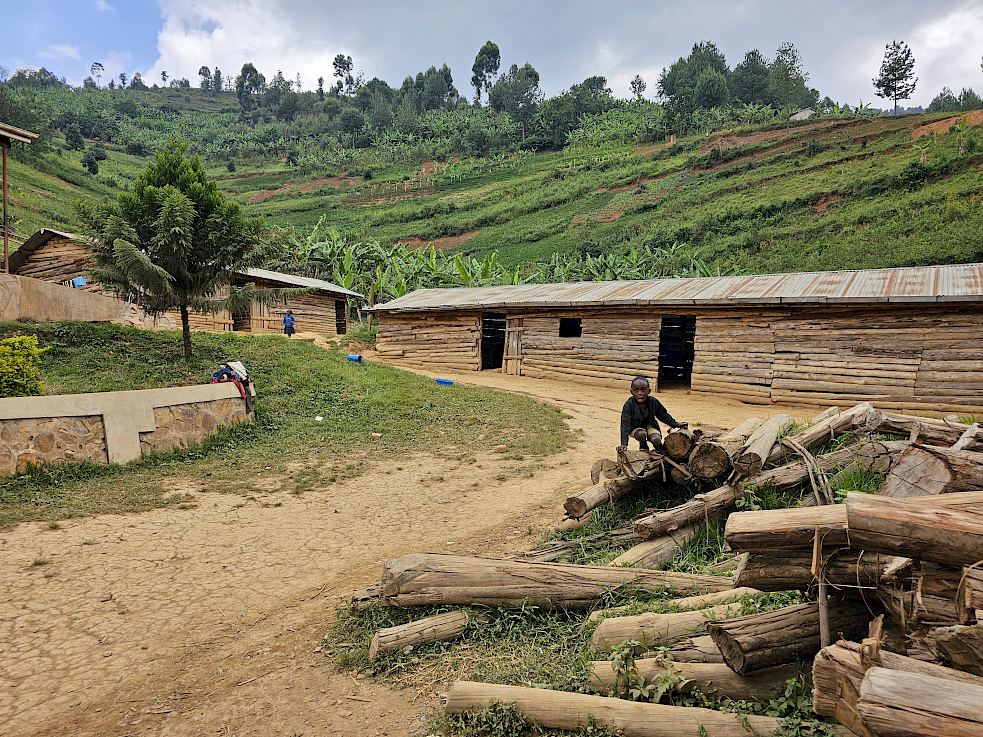
In addition to several very simple "buildings", there are two solid houses.
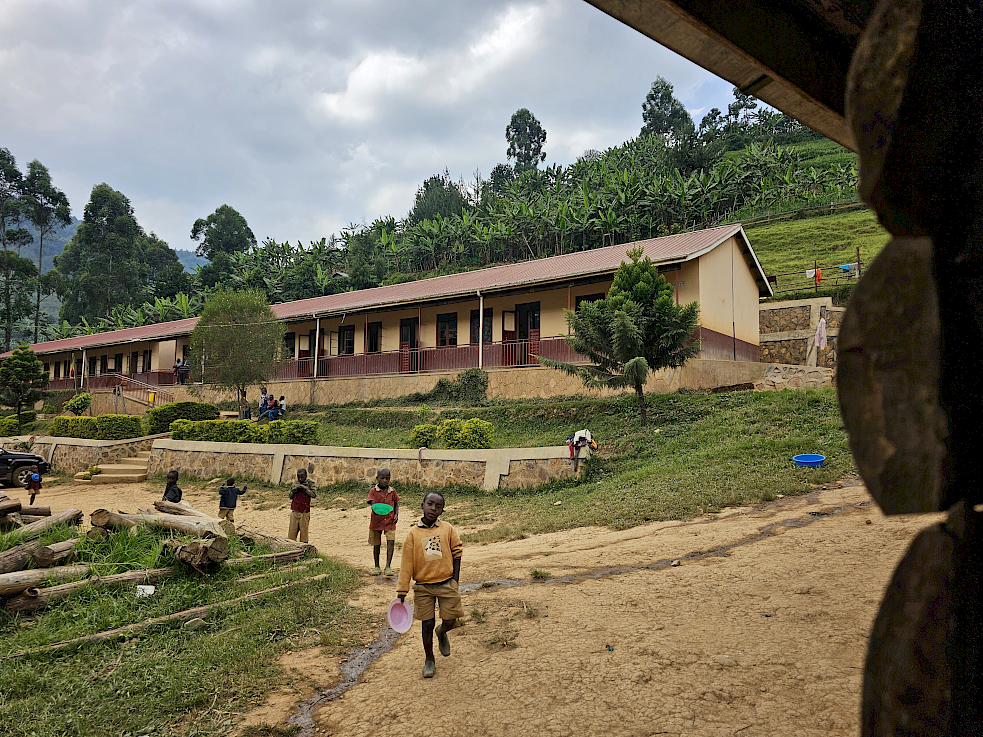
The actual school building, which was built in 2018 thanks to a one-time donation from American visitors, with the "teachers' room" and the three "offices" for the administration, the school management and the secretariat (a bit too many quotation marks - unfortunately there is no other way) ...
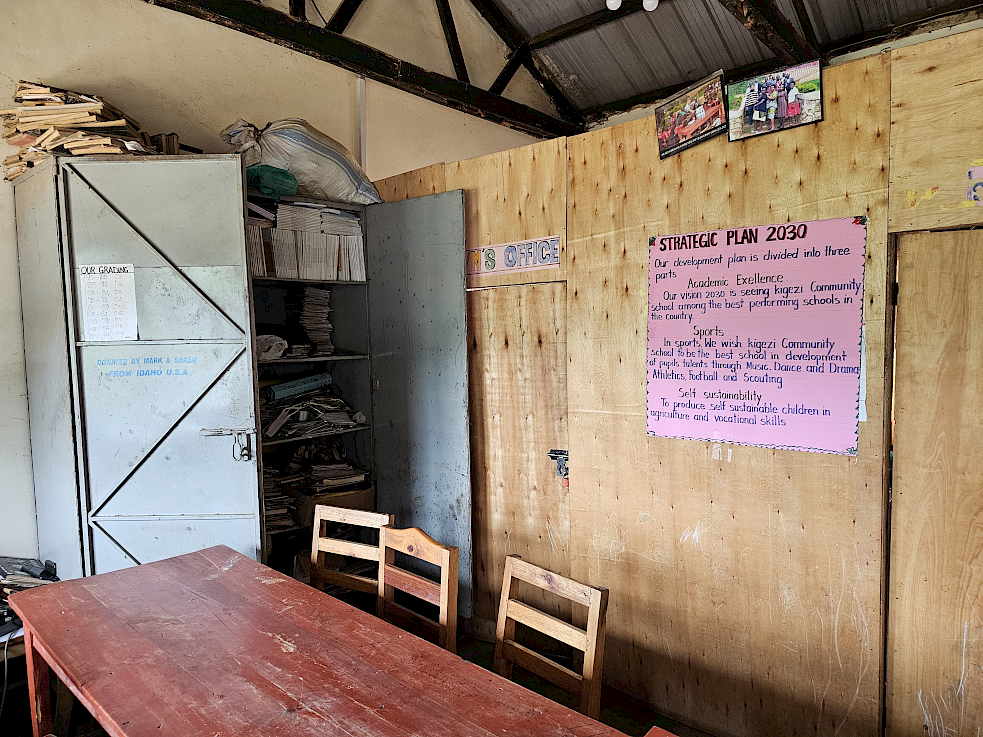
and the ten classrooms ...
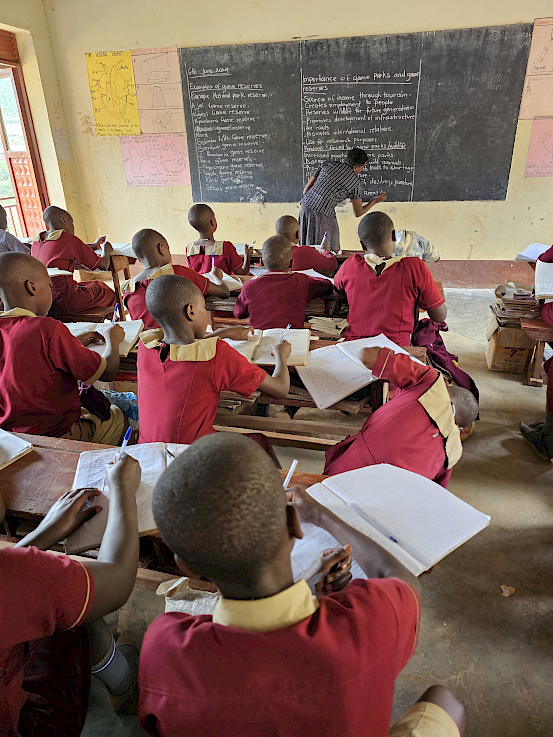
four of which have been converted into bedrooms for the children living on site.

The four kindergarten classes are currently housed in the shed-like outbuildings.

The second permanent building contains the pantry and the kitchen with the adjoining bedroom for the three-person kitchen team. Here, meals for 300 children and the staff are prepared every day under the simplest of conditions.
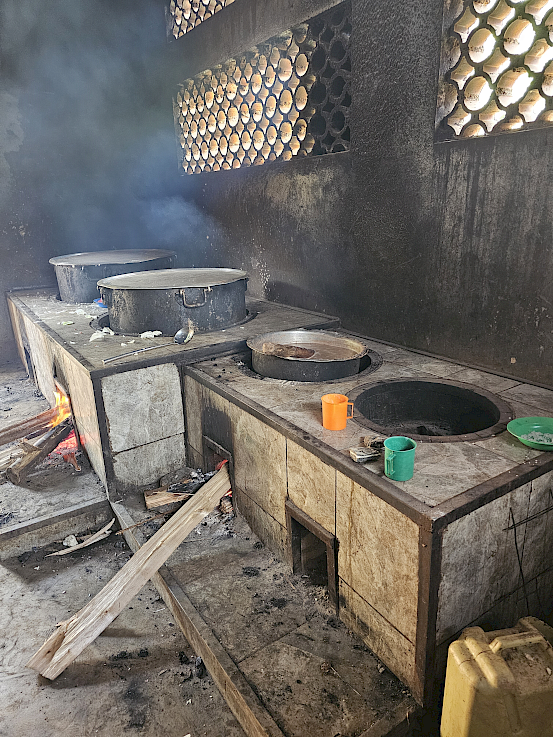
In the afternoon, I have the opportunity to exchange ideas at an extensive meeting with those responsible for the project, the school director, the headmaster, the school administrator and all the teachers, carers and other employees, including an insight into the current - anything but pleasant - budget.

We will be happy to present the concrete figures here on the website after my return.
For now, it's all about plugging holes everywhere. Food is currently only secured for the next month, the teachers' wages are three months behind schedule, and the urgently needed multi-purpose building cannot wait forever.

But, alongside the castles in the air, there are also clear, realistic strategies for the future. We are challenged - and we are confident.
From community school to high school
After returning late the evening before, we are taking today slowly. Over lunch together, we review yesterday's impressions.

In the afternoon we visit two high schools in the Kabale region.

There I am able to meet several former students from the Kigezi Community School and talk to them about their careers so far and their professional goals.

We end the evening in the backyard of a gas station. But it is not just any gas station, it is the very one where our guide wanted to briefly introduce us to the two owners of the gas station shop almost exactly nine months ago.

The two highly committed men who began 12 years ago to build an ambitious school and aid project for the remote Kigezi community...
Everyday life in the community
If you like, you can accompany us on today's journey back to the Kigezi community using the video link below.
We only stay briefly at the school and after a small culinary refreshment we set off on a longer hike with some accompanying people from the school.

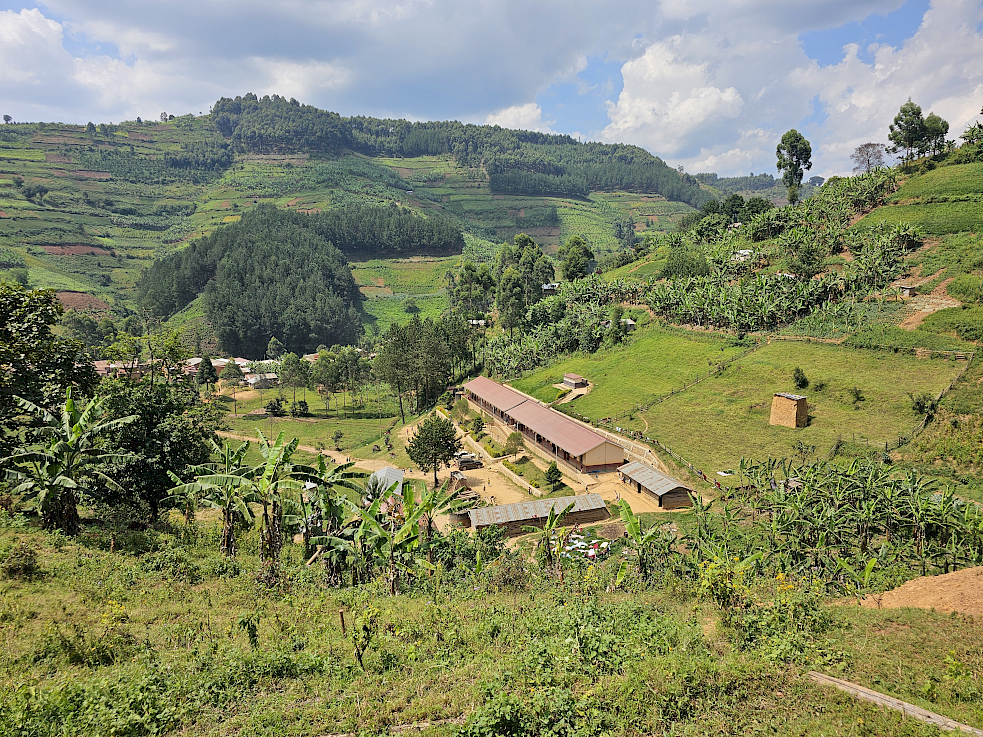
This takes us for a good four hours through the hills around the school, deep into and through the area of the community.

Once again, what I get to see and experience here in a very short time can hardly be put into words. The landscape and the encounters with the population working and fighting for their daily livelihood let me sink into thought for long stretches of the hike.


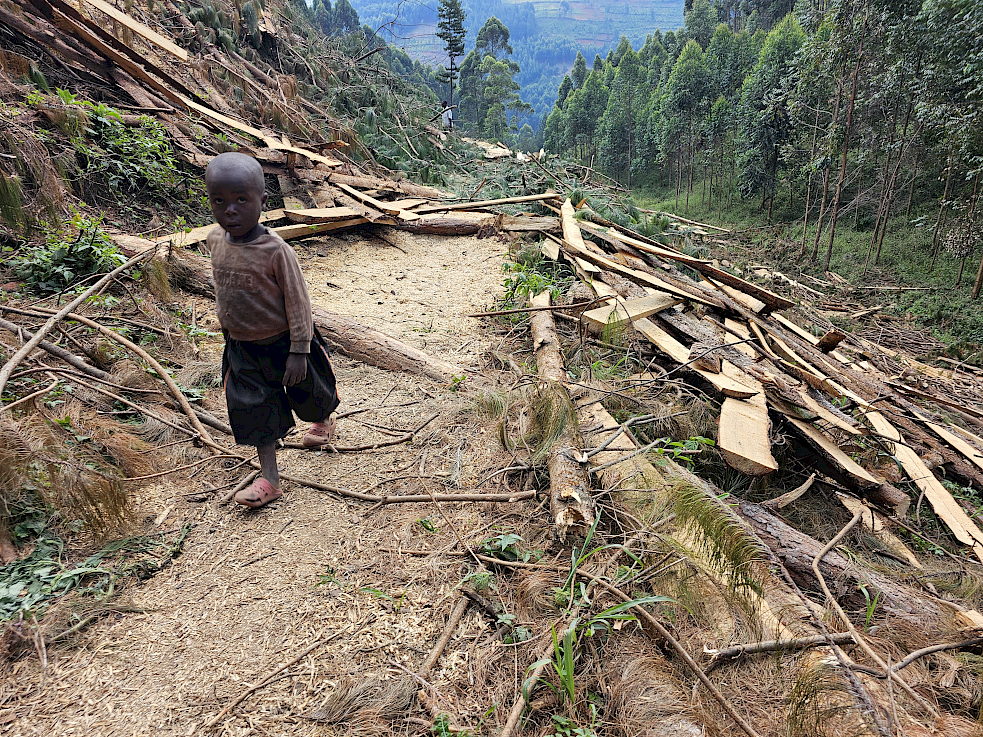
The warm hospitality of so many members of the community in their simplest houses testifies to the already extraordinary bond between the local population and the hopefuls from Switzerland.


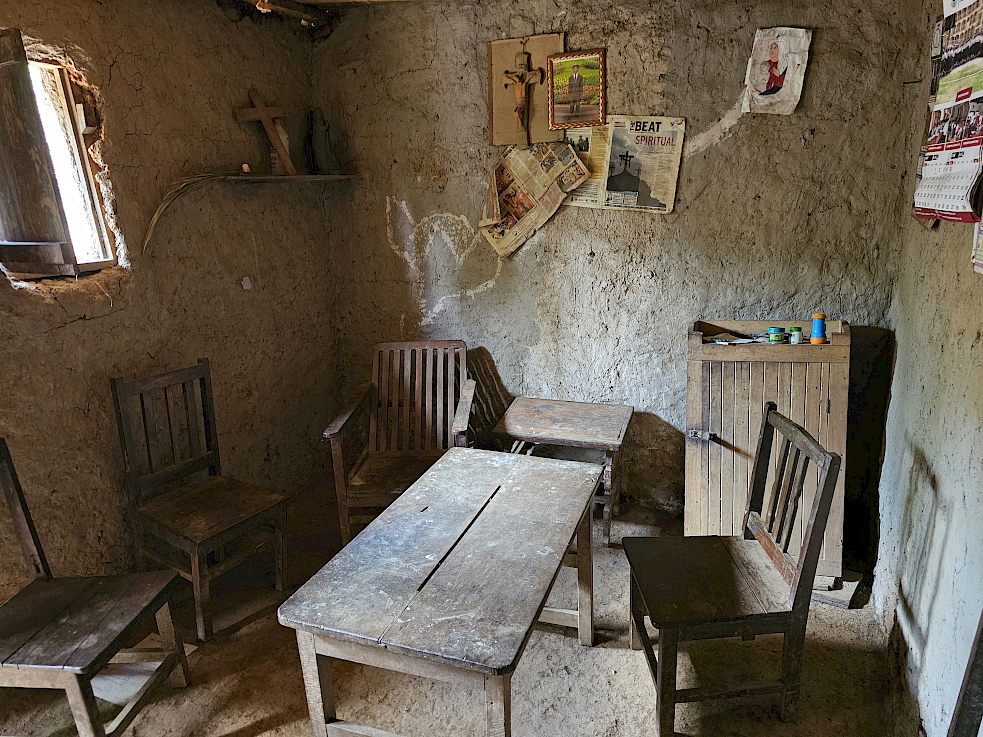
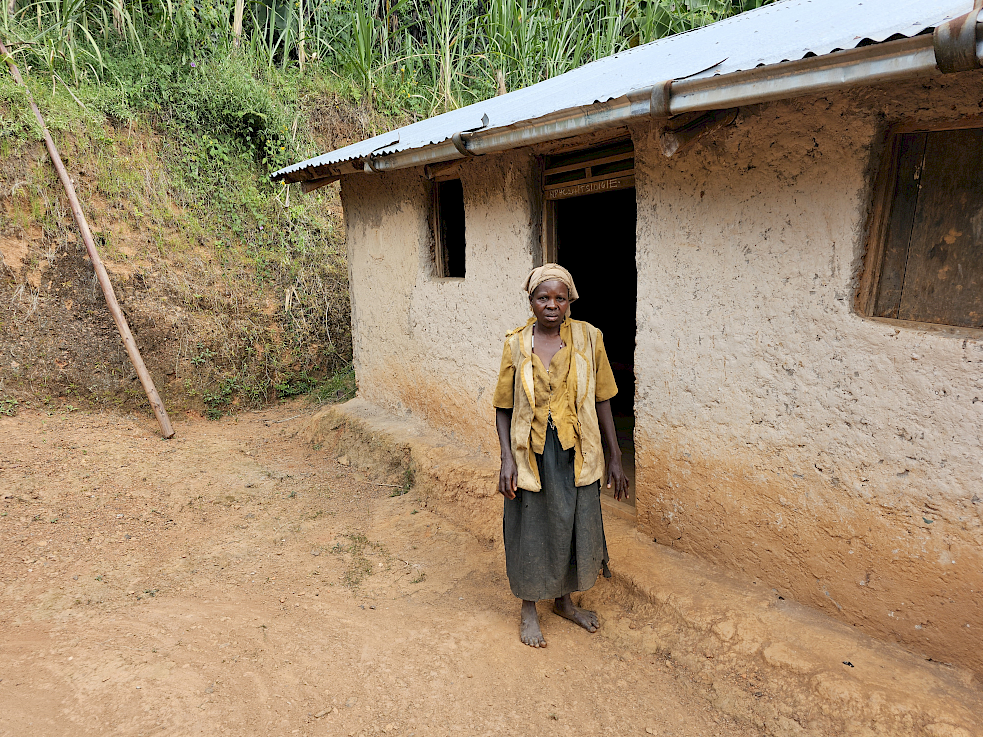
The relatives - mostly the mothers, as many fathers died during the Corona period - tell us about their hard daily lives and the great hopes they have for their children's education.

These four children live together with their mother in the simplest of conditions and share a common night camp. The school became aware of them a few months ago. The family currently receives regular meals from the school and the children will soon be healthy and strong enough to be able to go to school again.
I was also able to meet some relatives of the students we visited in the high schools the day before. And I was suddenly infinitely happy and grateful that I had made this spontaneous trip back to Uganda. It doesn't necessarily have to be high school. But one thing was made clear to me by the statements of students and relatives, even if they were formulated very differently, but nevertheless they were identical: If Uganda wants to develop further into the independence it hopes for - and it must - there is no way around education.
To do this, the school must also be able to develop and grow into an independent, sustainable independence. The state-recognized and now well-established Kigezi Community School should be able to accommodate far more children than is possible with the current infrastructure. Unfortunately, further expansion can only be considered once the school has achieved the independence it is aiming for, including financial independence.
That is why our support will initially focus on the school's basic needs: enough food for everyone and timely payment of wages to teachers and employees. Everything else will have to wait - even the urgently needed multi-purpose building, which played a decisive role in shaping and accelerating the start of our project.
For all those who are overwhelmed by all the pictures - I am too. Once everything has settled down a bit, I'll be back home in July with plenty of opportunity to process everything in peace at the grill with some beer, wine or a sip of banana gin. More details to follow shortly.
Visiting the local project managers
In Kabale, drive towards Rwanda at the large roundabout and then turn right after the second gas station. This will make it easy to find Julius' house. Micha lived there for two months last autumn, got involved with the Kigezi Orphans Project and regularly exchanged ideas with me.
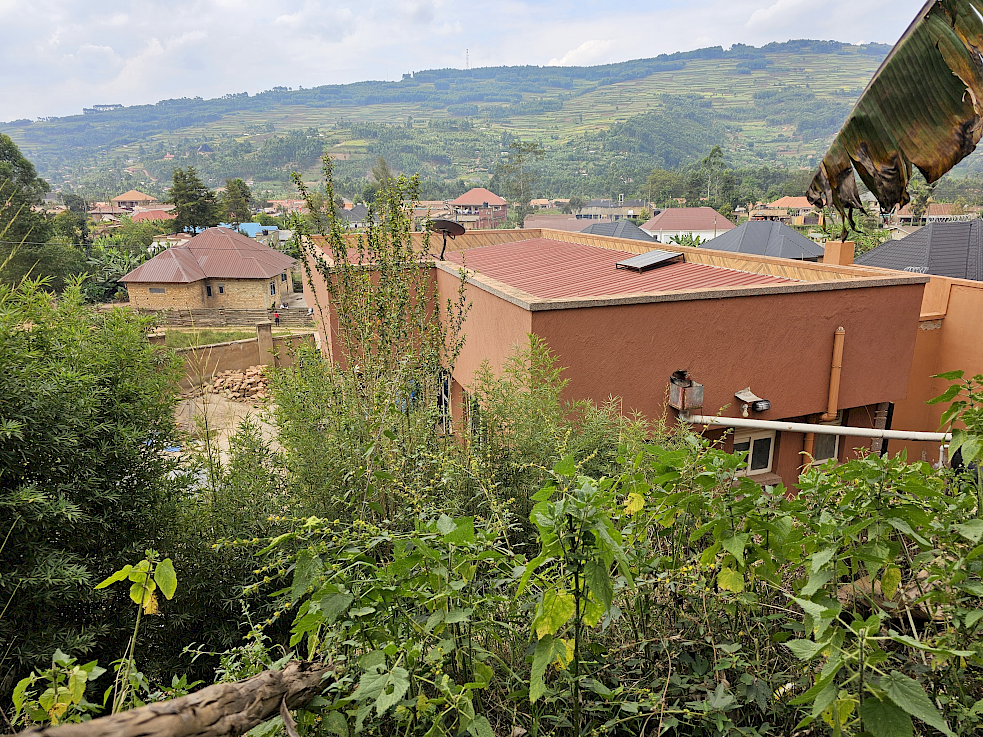
Now it's me who is here and is constantly exchanging experiences with Micha. The mood is happy and exuberant. We enjoy the evening together with the families of Julius and Egidius and many of their friends.
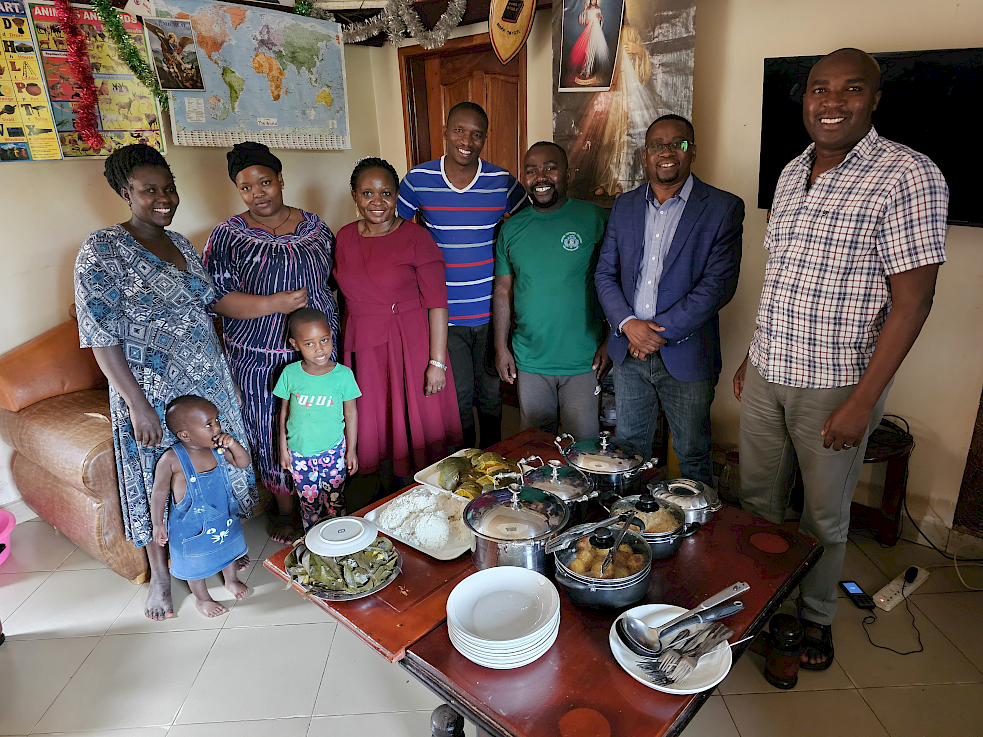
Once again, we don't just eat anything, but just anything that is available.

Those who like it and can tolerate it drink Enturire with it.

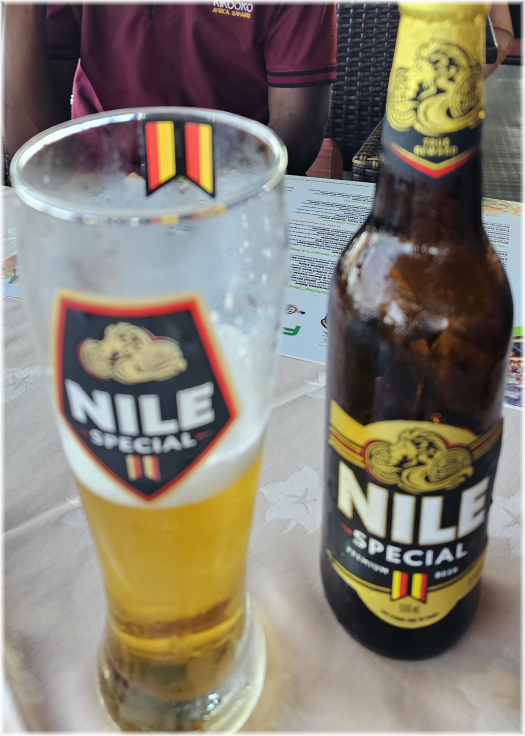
I'm reminded again of the magic potion that I was given at the Scout baptism. Once again, I give up after the third sip. Luckily, there's still the tried and tested Nile.
Despite the relaxed atmosphere, we are once again having serious discussions about the further development of our project.
We are talking about beekeeping and coffee cultivation. Ideas that have been on the table for a long time, but can only be implemented when the school is no longer constantly preoccupied with its own basic needs, but can focus on the targeted development of the community.
When the Amazima Trading Company exports coffee one day, the local farmers will receive more than the current 3 dollars per kilogram. Here in the supermarket, by the way, you currently pay around 20 dollars for a 500 gram glass of Nescafe. Value creation is all well and good - the only question that remains is who benefits from this value creation.
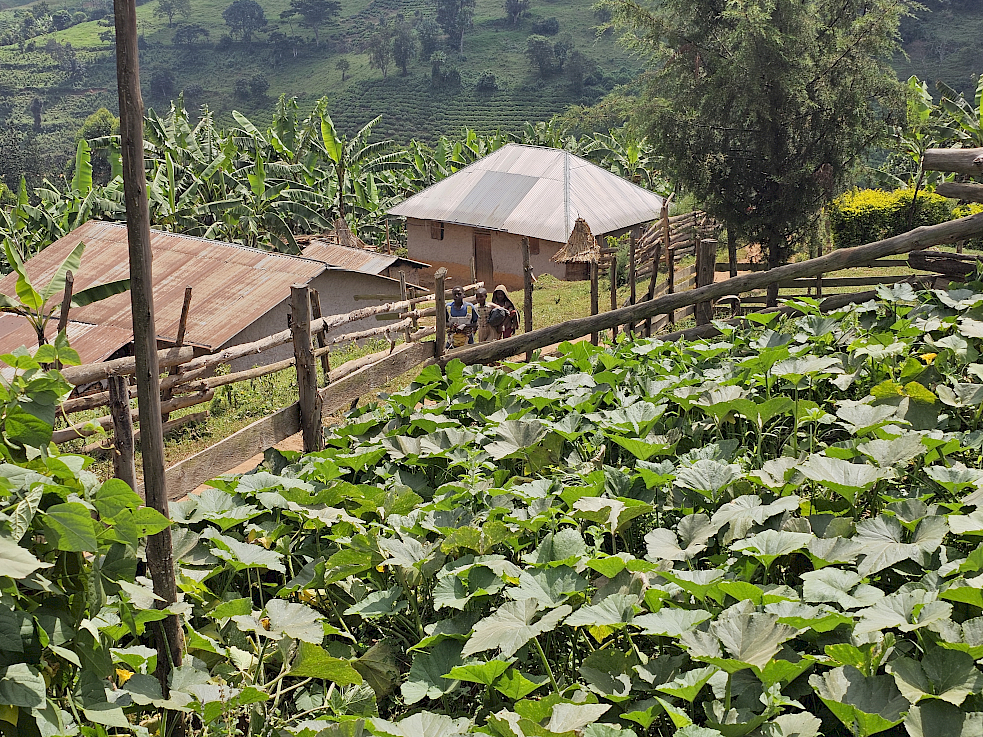
The deep commitment is owed neither to the Enturire nor to the Nile, but rather to the mutual agreement on our joint project. Today, too, the focus is on finding common paths and viable solutions.
Uganda has many faces
Before our first trip, I knew very little about Africa and absolutely nothing about Uganda. There were just a few stereotypes. For example, that Uganda is mostly desert and the people there, like in all of Africa, are basically bad and evil. That’s it! But Uganda has many faces. I will get to know another one of them today. The journey takes us out of Kabale into the hills that surround the city. And then suddenly this view:

High above the lake...
If I were an influencer and not just a blogger, I would of course mention the name here and that would at best provide for me for the rest of my life. That would not really help me or Kigezi's children. So I will only reveal the name in return for a small donation.
https://donate.raisenow.io/yyyhs [donation link - I admit to myself that there is so much advertising for our heart project at this point …
If you find out for yourself, you can go there. $220 for an overnight stay in a double room, including breakfast. A little help: There are 29 islands in the lake. One of them was once reserved for the deportation of mothers born out of wedlock. Today it is uninhabited.
I repeat: Uganda knows value creation. The question remains who benefits from this value creation.
Once we have finished starting up the project, we will be very happy to make concrete suggestions for inexpensive trips to Uganda that will benefit both the tour operators and the country.
On the way back, a completely different Uganda:
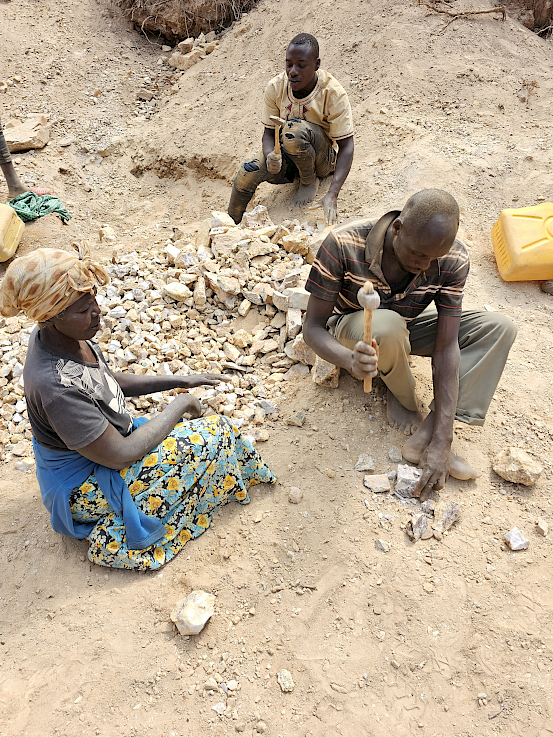
We drive past small and tiny quarries every few hundred meters. Here, the rural population defies nature for their daily income. These raw materials for building materials also very often make a detour via Kenya before they are then processed and returned to the market in Uganda. The rural population simply lacks the investment capital to keep the processing - and thus the added value - in their own country. It is neither our goal nor our task to bring this capital to Uganda. The country has to earn it itself. With our donations, we want to promote human capital, a practical basic education for as many children as possible from the region to which we have been brought by chance.
It is neither our goal nor our task to bring this capital to Uganda. The country has to earn it itself. Through our donations, we want to promote human capital, a practical basic education for as many children as possible from the region to which chance has led us.
Farewell tour with exciting detours
Today it is senior driver George's turn to take his two local companions out. First they guide me to one of their trading partners, from whom the school buys the maize flour that it needs in large quantities every day and which serves as the basis for the basic diet. The school usually receives two deliveries of 1.5 tons each per month.

Today we reach our destination, once again the community school, by taking a deliberately chosen detour. Around midday we arrive in Kisiizi, a neighboring community about 15 km from Kigezi.
This is also where the hospital is located, which the Orphans Project can use if necessary. An astonishingly well-developed and equipped care facility with a wide variety of departments, from a children's hospital to a retirement home, which dates back to a missionary project in the late 1950s.
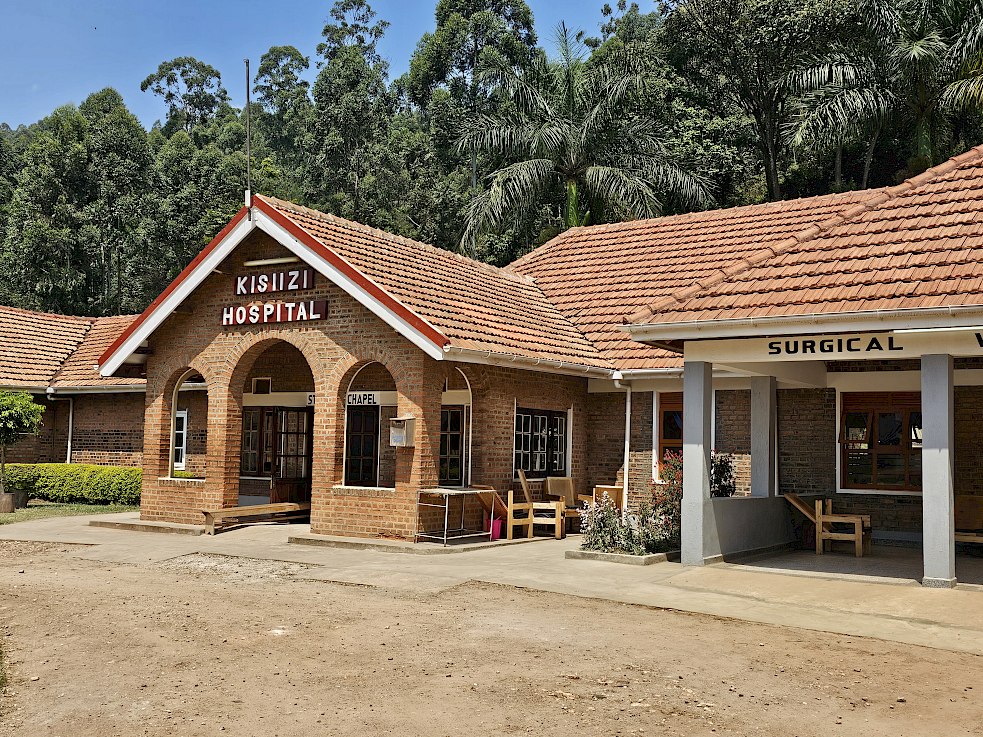
The tourist development of the Kisiizi Falls also goes back to this origin. During a short introduction in the Visitors’ Centre we get an insight into the history of how it came about, before a short walk takes us to the waterfall.

In earlier times, wealthy visitors, mostly from England, were carried to the waterfall in such sedan chairs.
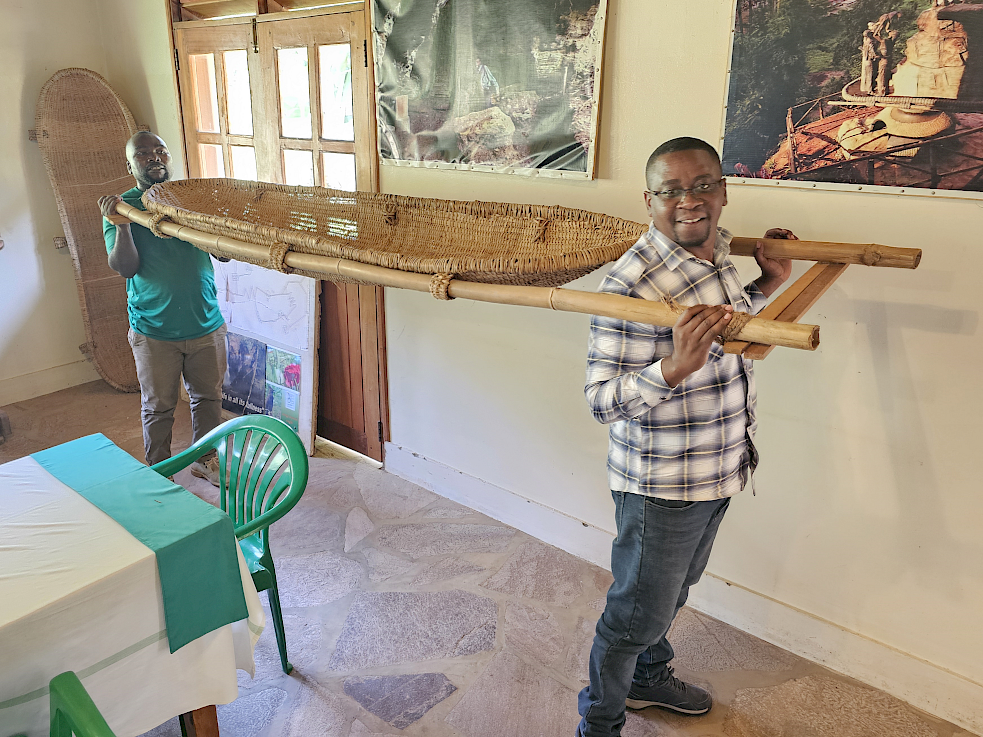
But not exclusively… As this story would go well beyond the scope of the travel blog, it can be viewed independently at this link:
> More or less funny things around the Kisiizi Falls
The water from the catchment area above the community not only supplies the Kisiizi Falls but also a small power plant that supplies the hospital and the community as well as the surrounding region with electricity. Just as I enjoyed talking at length with the local technicians about the differences between their plant and the Grimsel power plants, I will tell you more about this small (or micro) power plant when the opportunity arises.

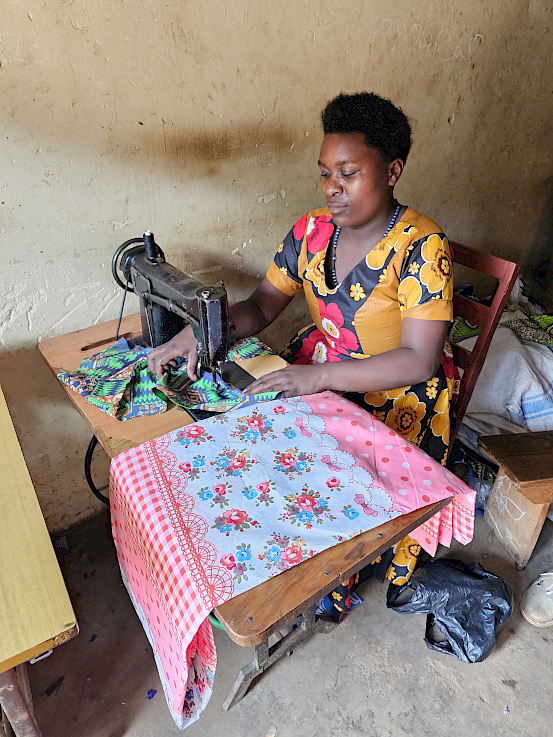
On the way to Kigezi, I have the opportunity to visit one or two workplaces of former pupils from "our" school. Among them is this small sewing studio, where a resident of the community can pass on her skills for a modest salary.
When I arrive at the school, a few surprises await me - as so often on this festival:
- I can see how the "Runoonko" is prepared...
- which we can then enjoy together,
- before more performances by the children of Kigezi are on the program,
- final speeches are given,
- a tree is planted for me
- and I am shown the piece of land that the community will give to Micha and me...
- to build our "Swiss House" here one day

Last errands - last surprises
On my last day in Kabale, there are still a few small errands to run. For example, buying some local tea.
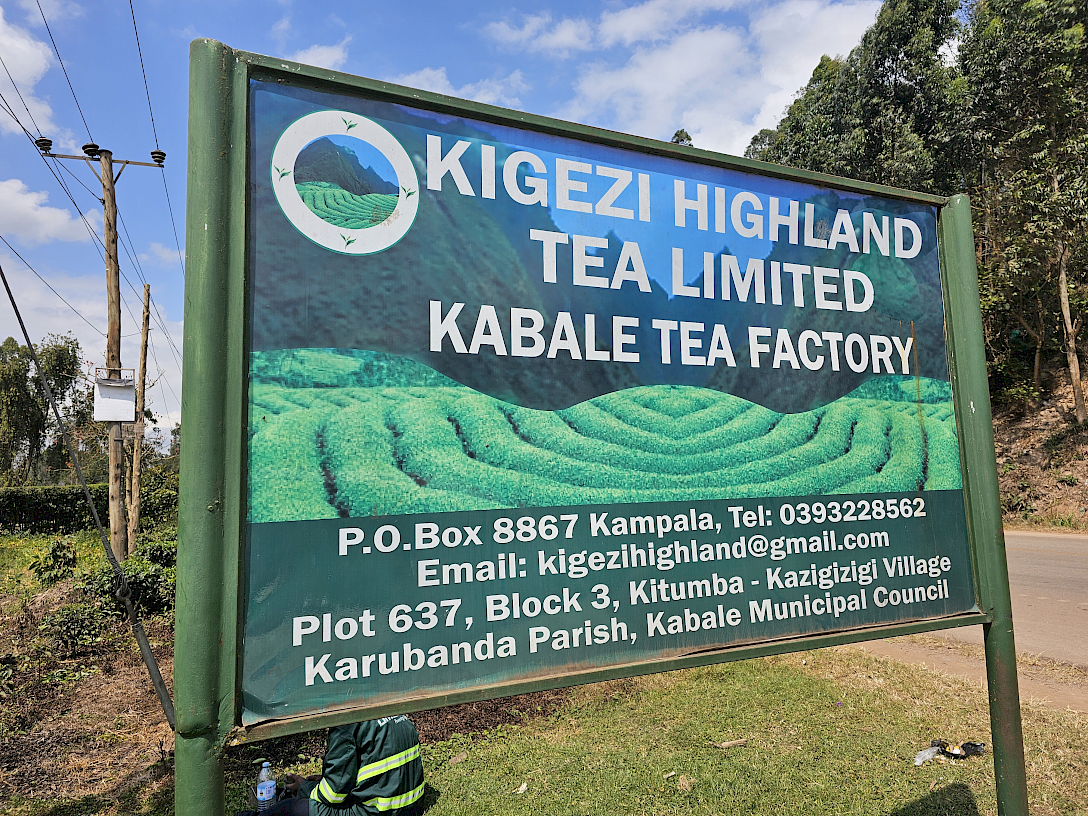
So we drive to the nearby factory. To gain access, my hosts get in touch with the director, which "degenerates" into us being personally received by him in his office.

After a bit of networking, the production manager shows up and leads us through the factory for the next hour and a half. His highly committed explanations give us a deep insight into the entire production process.

We also learn a lot about the complex requirements that have to be taken into account in order to be able to position oneself successfully in the highly competitive local market.

I took the liberty of taking a few more pictures than the three or four I was allowed - as an exception. The video contribution below remains uncommented.
On the way back, I finally have the opportunity to meet Julius and Egidius' two sons during a short detour to their school.
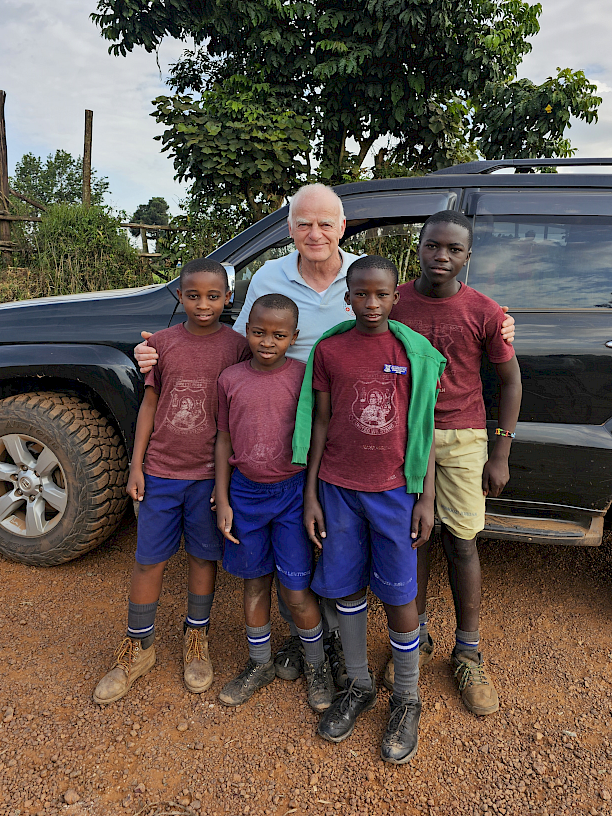
Then the return trip to my accommodation is postponed a little longer. First we go to Capricon, where we meet in a conference room for a spontaneous final meeting with Josef and Robert. Two bright minds who will use their extensive knowledge - and their enthusiasm - to actively and usefully support us in the further development of our future projects.

Entertaining return trip
Early in the morning, I am picked up one last time by my two hosts. The one-and-a-half-hour drive takes us through mountainous terrain from Kabale to the Kisoro airstrip.

One line of the song that the Community School produced for the collaboration between the Orphans Project and the Amazima association says:
«Kigezi is the Switzerland of Uganda.»

The farewell is warm and surprisingly unsentimental - knowing that we have done good work in the last few days and that we will see each other again sooner or later to continue.

During the stopover in Entebbe, which lasts several hours, I finally invite the blogger to a business lunch.

Cost me a whopping 50,000

Equivalent value?
No idea, I'm a local now...
P.S.
By the way, I leave my laptop and smartphone unattended while I go to the toilet. Everything is still there.
AMAZIMA means TRUST

> pdf-download of entire travel blog